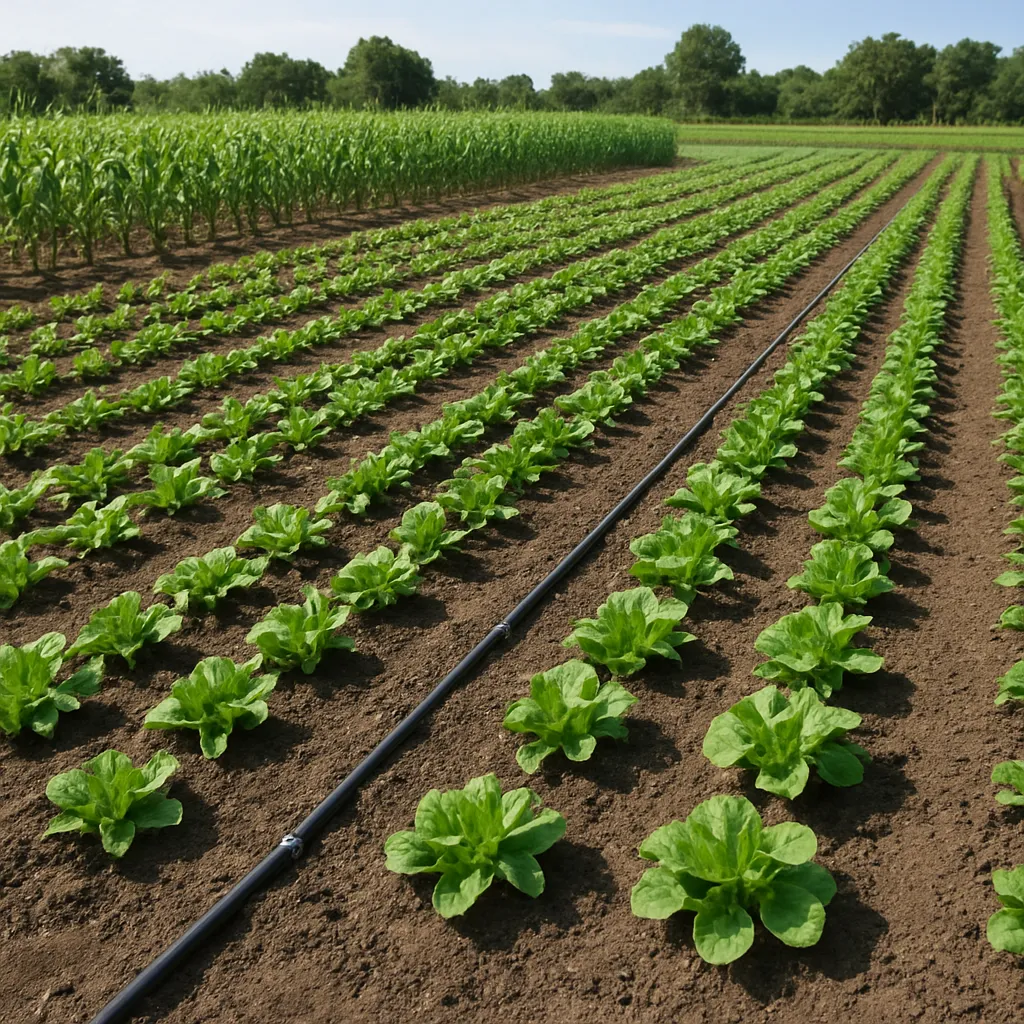
Growing crops with minimal irrigation requires a strategic blend of soil management, smart crop choices, efficient watering techniques, and proactive monitoring. By focusing on sustainable practices, farmers can maximize yields while conserving precious water resources.
Soil Preparation and Management
Understanding Soil Structure
Healthy crops begin with a solid foundation. Improving soil structure boosts aeration, root penetration, and moisture retention. Sandy soils drain quickly, while clay soils hold water but may become compacted. Aim for a loamy balance by adding organic amendments.
- Incorporate organic matter such as compost or well-rotted manure to enhance nutrient availability and water-holding capacity.
- Perform soil tests to assess pH and nutrient levels. Adjust pH with lime or sulfur to optimize nutrient uptake.
- Implement crop rotation to reduce disease buildup and maintain soil fertility.
Mulching to Conserve Moisture
Mulching forms a protective layer that reduces evaporation from the soil surface. Organic mulches break down over time, further improving soil health.
- Apply straw, wood chips, or grass clippings 5–10 cm thick around plant bases.
- Use dark-colored or reflective plastic mulch to control weeds and stabilize soil temperature.
- Monitor mulch depth regularly and replenish as it decomposes.
Choosing the Right Crops and Varieties
Selecting Drought-Tolerant Species
Not all crops thrive under minimal irrigation. Prioritize those with deep root systems or natural drought tolerance. Such varieties extract soil moisture more effectively and withstand dry spells.
- Millets, sorghum, and tepary beans are inherently adapted to arid conditions.
- Look for certified drought-resistant hybrids of maize, wheat, or sunflowers.
- Trial several varieties on a small scale to determine local performance before full-scale planting.
Using Cover Crops for Soil Protection
Cover crops guard against erosion, suppress weeds, and fix nitrogen in the soil. During fallow periods, plant legumes or grasses to maintain organic content and structure.
- Clover and vetch add nitrogen and improve soil structure.
- Rye or oats produce extensive roots that break up compacted layers.
- Terminate cover crops at the right time to conserve moisture for the next main crop.
Efficient Irrigation Methods
Drip Irrigation Systems
Drip irrigation delivers water directly to the root zone, minimizing evaporation and runoff. Precise control over flow rates ensures uniform distribution and maximizes water efficiency.
- Install pressure regulators and filters to prevent clogging of emitters.
- Space drip lines according to planting density and crop type.
- Combine drip with soil moisture sensors to automate irrigation scheduling.
Subsurface Irrigation Techniques
Burying drip lines or porous tubes beneath the soil surface reduces surface evaporation further. Subsurface approaches support consistent moisture retention around roots.
- Maintain uniform depth to avoid root penetration into lines.
- Use geotextile barriers around emitters to prevent soil intrusion.
- Monitor subsurface flow with occasional trench checks.
Monitoring and Scheduling
Soil Moisture Sensors
Accurate data on soil moisture guides irrigation decisions. Sensors placed at multiple depths inform on root depth moisture availability, preventing overwatering.
- Install tensiometers or capacitance probes at 15, 30, and 45 cm depths.
- Calibrate sensors regularly and compare readings with manual checks.
- Set irrigation thresholds to trigger watering only when necessary.
Weather-Based Scheduling
Integrating real-time weather data with irrigation helps adapt to changing conditions. Evapotranspiration models estimate daily water loss, ensuring timely water application.
- Use local weather stations or online services for accurate ET rates.
- Adjust irrigation volumes based on rainfall and temperature fluctuations.
- Maintain a log of irrigation events and crop performance for continuous improvement.
Additional Water Conservation Practices
Rainwater Harvesting
Collect runoff from rooftops or field catchments in storage tanks or ponds. Filter and distribute harvested water during dry periods to reduce reliance on wells.
- Design gutter and channel systems to maximize catchment efficiency.
- Use sediment traps to maintain water quality.
- Integrate solar-powered pumps for off-grid distribution.
Contour Farming and Terracing
Shaping the land to follow natural contours slows water runoff and enhances infiltration. Terraces create flat planting areas on slopes, conserving moisture.
- Use laser leveling or manual surveying to plan contour lines.
- Establish grassed waterways to direct excess water safely.
- Combine with cover crops to stabilize terrace edges.
Integrating Organic and Inorganic Amendments
Adding amendments like biochar, compost, or mineral conditioners can boost moisture retention and nutrient availability. Balanced nutrition reduces plant stress under limited water supply.
- Apply biochar at low rates to enhance cation exchange and water-holding capacity.
- Mix slow-release fertilizers with organic compost to stabilize nutrient release.
- Monitor soil health to prevent salinity buildup from inorganic inputs.