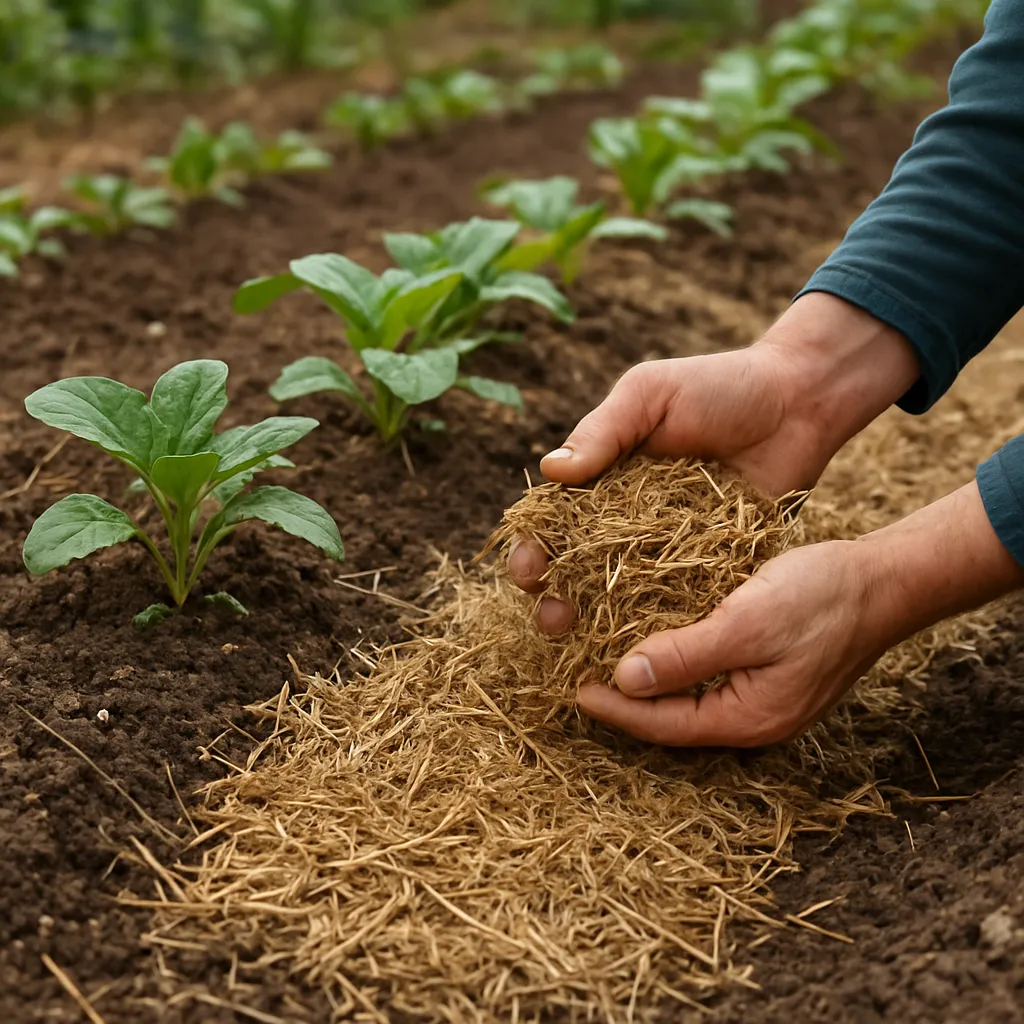
Organic mulch offers a natural approach to enriching soil and enhancing crop yields by harnessing the power of recycled plant and animal materials. When applied correctly, it improves soil structure, conserves water, suppresses weeds, and fosters a thriving ecosystem of beneficial organisms. This article outlines detailed strategies for choosing, preparing, and managing organic mulch in crop production, helping farmers and gardeners optimize both short-term performance and long-term sustainability.
Choosing the Best Organic Mulch
Types of Organic Materials
- Wood chips and bark: Ideal for long-lasting coverage and weed suppression.
- Straw and hay: Readily available, decomposes quickly to add organic matter.
- Grass clippings: Rich in nitrogen but must be dry to avoid matting and odor.
- Compost: Nutrient-dense, blends easily with soil for immediate nutrient cycling.
- Leaves and leaf mold: Excellent for moisture retention and improving soil structure.
- Cocoa hulls and seaweed: Specialty mulches that supply micronutrients and beneficial minerals.
Assessing Local Availability
Before committing to a specific material, evaluate what resources are abundant in your region. Partner with local arborists for wood chips, contact municipal compost programs for aged compost, or coordinate with nearby farms for straw or hay. Prioritizing locally sourced mulch reduces transportation costs and supports a circular agricultural economy.
Carbon-to-Nitrogen Ratios
Effective decomposition hinges on an optimal carbon-to-nitrogen ratio (C:N), generally between 25:1 and 30:1. High-carbon materials like wood chips may temporarily tie up soil nitrogen as they break down—supplement with nitrogen-rich amendments or mix with grass clippings to balance the ratio.
Preparing Your Field and Applying Mulch
Soil Preparation
Begin by conducting a soil test to determine baseline fertility and pH. Correct any nutrient deficiencies and adjust pH to ideal crop-specific levels. Loosen compacted soil with tilling or aeration tools to improve root penetration and water infiltration. Remove weeds and perennial grasses to minimize competition before mulching.
Layer Thickness Guidelines
- Vegetable gardens: Apply a 2–3 inch layer of straw or compost to allow seedlings to emerge easily.
- Orchards and vineyards: Use 4–6 inches of wood chips or bark to suppress perennial weeds and moderate temperature swings.
- Permanent beds: Maintain 3–5 inches of mixed organic material, replenishing annually as it decomposes.
Application Techniques
Spread mulch evenly with rakes or wheelbarrows, avoiding direct contact with plant stems. Leave a 2–4 inch gap around trunks and crowns to prevent stem rot and pest infestation. For row crops, apply mulch between rows first, then carefully fill in around plants to maintain airflow and prevent fungal growth.
Planting Through Mulch
If you plan to sow seeds or transplant into mulched ground, create planting holes or furrows, place seeds at the correct depth, and backfill with soil before covering the surrounding area with mulch. This technique preserves moisture around the seedbed while keeping mulch from smothering germinating seedlings.
Benefits of Organic Mulch in Crop Production
- Moisture retention: Reduces evaporation, cutting irrigation needs by up to 50%.
- Weed control: Blocks sunlight, significantly lowering weed emergence.
- Improved soil structure: Roots create channels as they grow through loose mulch, enhancing porosity.
- Enhanced biodiversity: Supports earthworms, beneficial insects, mycorrhizal fungi, and microbes.
- Moderated soil temperature: Insulates roots against extreme heat or cold.
- Reduced erosion: Shields surface soil from rain splash and runoff.
Long-Term Soil Health Improvements
Annual addition of organic mulch steadily builds humus, increases cation exchange capacity (CEC), and stabilizes pH. Over time, crops develop healthier root systems, exhibit stronger stress tolerance, and yield higher-quality produce with improved flavor and nutrient density.
Sustainability and Environmental Impact
Carbon Sequestration
By capturing atmospheric carbon in biomass and returning it to the soil, organic mulches contribute to climate mitigation. Decomposing mulch layers incorporate carbon into stable soil organic matter, reducing greenhouse gas emissions while enriching the ecosystem.
Integrating Mulch into Crop Rotation
Rotate mulch types to balance nutrient contributions and prevent buildup of specific pathogens. For example, alternate between high-nitrogen cover crop residues and high-carbon woody mulches. This dynamic approach maintains a balanced nutrient profile and supports diverse soil life.
Water Conservation Strategies
- Combine mulch with drip irrigation to deliver water directly to roots while the mulch layer prevents surface evaporation.
- Implement contour planting and terracing in sloped fields to maximize moisture capture.
- Use mulch around transplant plugs immediately after planting to minimize transplant shock and reduce watering frequency.
Troubleshooting Common Issues
- Pest habitat concerns: Some mulches may shelter slugs or rodents. Offset this by using coarse materials like pine needles or alternating with plastic mulch in sensitive areas.
- Nitrogen immobilization: If young plants exhibit yellowing, supplement with a side-dress of composted manure or fish emulsion to release bound nitrogen.
- Fungal growth: Ensure adequate air circulation by thinning overly dense mulch layers and avoid mulching wet foliage.
- Mulch displacement: After heavy rains or winds, reinspect and reorder mulch layers to maintain uniform coverage.
Solutions and Best Practices
Regular field scouting allows early detection of emerging problems. Adjust mulch thickness based on seasonal climate variations—lighter in winter to promote warming, heavier in summer for cooling. Employ integrated pest management (IPM) methods alongside mulching to keep pest populations in check without resorting to synthetic chemicals.
Key Takeaway
Effective use of organic mulch transforms cropping systems into more productive, resilient, and environmentally friendly operations. By carefully selecting materials, following proper application techniques, and addressing challenges proactively, growers can leverage mulch to unlock healthier soils, stronger crops, and long-term sustainability.