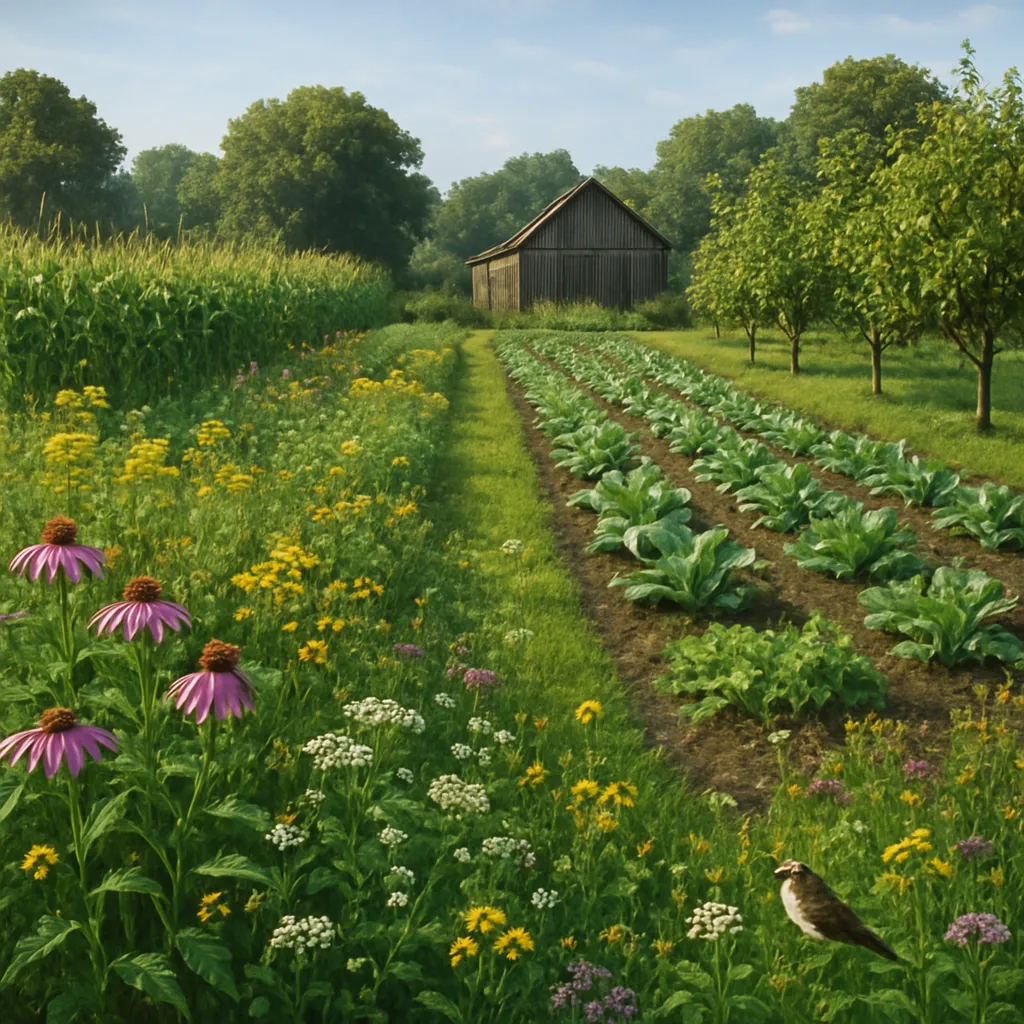
Maintaining diversity on farms is not just an environmental ideal; it’s a practical approach to securing long-term productivity and resilience. By integrating a range of species, practices, and habitats, farmers can boost soil fertility, improve **pest control**, and enhance **ecosystem** stability. This guide explores actionable methods to foster a vibrant agricultural landscape.
Understanding the Importance of Biodiversity in Farming
What Is Agricultural Biodiversity?
Agricultural biodiversity, or agrobiodiversity, refers to the variety of life found on farms, including crops, livestock, beneficial insects, soil organisms, and associated wild species. It encompasses the genetic variation within species (for example, different wheat cultivars), the variety of species (such as legumes, cereals, and fruit trees), and the diversity of ecosystems (like wetlands, hedgerows, or pasture). Embracing this complexity is essential for creating a **sustainable** farm that can adapt to changing conditions.
Key Benefits of Biodiversity
- Resilience: Diverse systems recover more quickly from extreme weather, disease outbreaks, or market shifts.
- Soil health: A multitude of soil organisms—from earthworms to mycorrhizal fungi—improves nutrient cycling and structure.
- Pest management: Natural predators control pest populations, reducing reliance on chemical pesticides.
- Pollination: A variety of flowering plants supports bees, butterflies, and other **pollinators** vital for fruit and seed production.
- Water regulation: Diverse root systems enhance infiltration and reduce erosion, preserving topsoil and water quality.
Practical Strategies to Enhance Biodiversity
Crop Rotation and Intercropping
Rotating crops disrupts pest cycles, balances nutrient demands, and supports a wider array of soil organisms. Intercropping—growing two or more crops simultaneously—provides ground cover that suppresses weeds and encourages beneficial insects.
- Alternate deep-rooted and shallow-rooted species to optimize nutrient uptake.
- Pair cereals with legumes to naturally boost soil nitrogen through **biological** fixation.
- Design planting patterns that create habitats for beneficial predators.
Agroforestry and Shelterbelts
Integrating trees and shrubs into farmland—known as agroforestry—creates microclimates, reduces wind erosion, and serves as habitat for birds and insects.
- Plant shelterbelts around field margins to act as windbreaks.
- Include fruit or nut trees to diversify farm outputs and attract pollinators.
- Use riparian buffer strips along waterways to filter runoff and provide wildlife corridors.
Conservation Tillage and Cover Crops
Minimizing soil disturbance preserves organic matter and fungal networks essential for plant health. Cover crops protect bare soil during fallow periods, reduce **erosion**, and add biomass back into the system.
- Sow legumes or grasses after harvest to keep soil covered and fix nitrogen.
- Terminate cover crops strategically to maximize mulch benefits without hampering spring planting.
Implementing Integrated Pest Management and Pollinator Support
Integrated Pest Management (IPM)
IPM focuses on a combination of cultural, biological, and mechanical controls to minimize chemical inputs while effectively managing pests.
- Monitor pest populations regularly to target treatments only when thresholds are exceeded.
- Introduce or conserve natural enemies such as lady beetles, lacewings, and parasitic wasps.
- Deploy pheromone traps and barrier tactics to confuse or block pest movement.
Creating Pollinator-Friendly Habitats
Supporting wild pollinators enhances crop yields and biodiversity. Diverse flowering strips provide nectar and nesting sites throughout the season.
- Plant native wildflowers along margins and between rows.
- Maintain patches of bare ground for ground-nesting bees.
- Avoid **neonicotinoids** and choose targeted, low-toxicity products when treatment is necessary.
Maintaining Soil Health and Genetic Diversity
Fostering a Living Soil
Soil is a dynamic ecosystem teeming with bacteria, fungi, protozoa, and more. Cultivating this living network is fundamental to nutrient availability and plant health.
- Add organic amendments like compost and well-rotted manure to feed soil biota.
- Use mulches to moderate soil temperature and moisture.
- Practice minimal disturbance to preserve fungal hyphal networks.
Preserving and Utilizing Genetic Diversity
Relying on a narrow range of varieties increases vulnerability to disease and climate shifts. Embracing heirloom and regionally adapted cultivars builds **genetic diversity**.
- Establish on-farm seed banks to save local varieties.
- Participate in seed exchanges or community seed libraries.
- Trial new varieties in small plots to assess performance under local conditions.
Integrating Conservation Practices into Farm Planning
Landscape-Level Collaboration
Biodiversity thrives when farms are part of a mosaic of habitats. Work with neighbors, extension agents, and conservation groups to coordinate efforts.
- Create contiguous corridors of hedgerows, grasslands, and woodlots.
- Share resources such as equipment for planting cover crops or establishing hedges.
- Engage in collective monitoring of wildlife and habitat quality.
Economic and Social Incentives
Adopting biodiversity-friendly methods can unlock new markets and funding opportunities.
- Seek certification programs (e.g., organic, regenerative) that reward conservation efforts.
- Offer agro-tourism or educational visits showcasing sustainable practices.
- Apply for grants or subsidies aimed at ecological restoration and habitat creation.