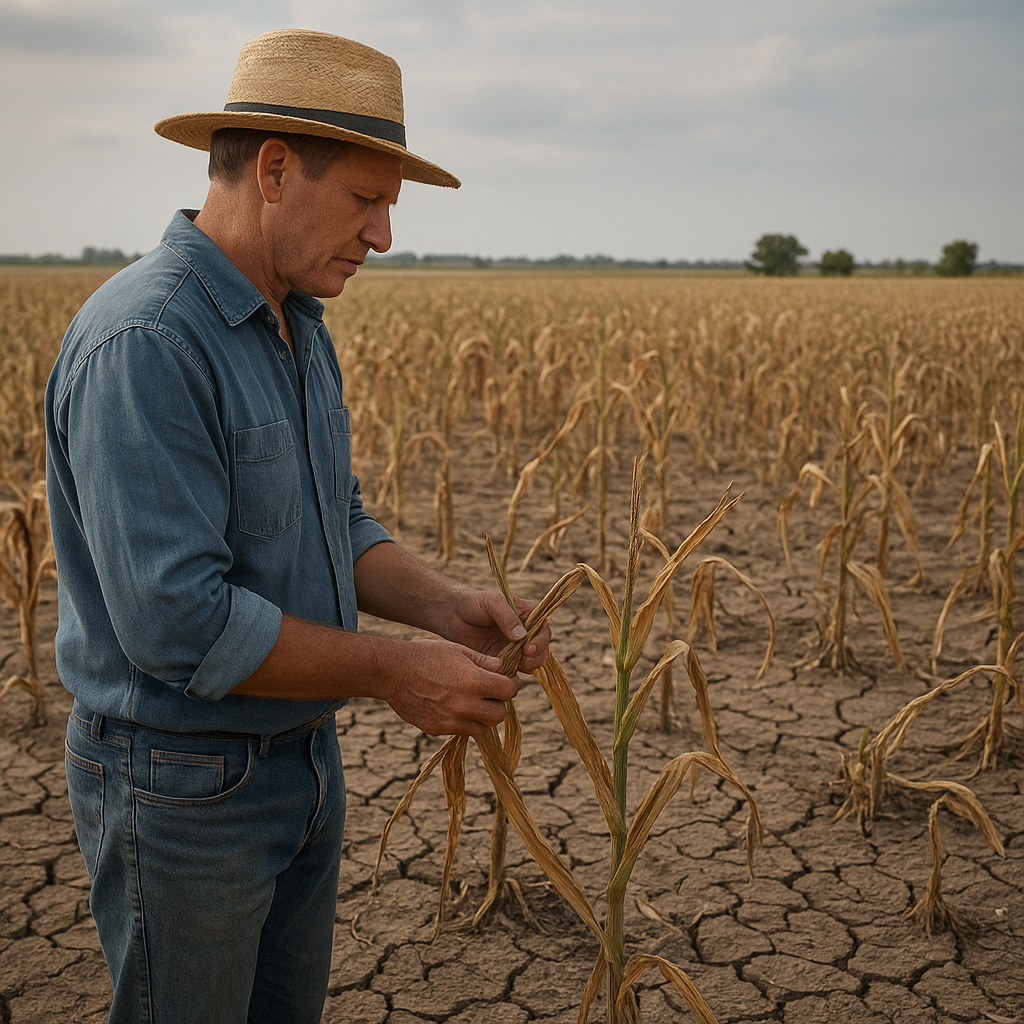
Managing water scarcity on farmland requires a combination of **strategic planning**, **innovative techniques**, and careful **monitoring**. Farmers facing prolonged dry spells must adapt to ensure crop survival, maintain soil fertility, and safeguard long-term productivity.
Understanding drought and Its Impacts
Before implementing practical measures, it is vital to grasp the nature of a drought and how it affects various aspects of your operation. A drought is not simply a period of low rainfall. It influences soil chemistry, plant physiology, and the economic resilience of an agricultural enterprise.
Types of Drought
- Meteorological Drought: A prolonged period with below-average precipitation.
- Agricultural Drought: When soil moisture is insufficient to support average crop yields.
- Hydrological Drought: Reduced streamflow, reservoir levels, and groundwater reserves.
- Socioeconomic Drought: When water shortages hamper community livelihoods and markets.
Key Consequences
- Decline in soil health due to reduced organic matter decomposition.
- Increased risk of erosion from wind and occasional heavy rains after dry periods.
- Lower crop yields, potentially leading to higher production costs and market instability.
- Stress on livestock resulting from limited forage and water availability.
Enhancing Soil Moisture and Retention
Soil is your first line of defense against drought stress. Techniques that improve moisture retention and nurture soil biology can pay dividends over consecutive dry seasons.
Organic Amendments and **Soil Structure**
- Add well-composted manure or green compost. These amendments improve pore space, fostering better water infiltration and retention.
- Rotate cover crops such as clover or vetch to fix nitrogen, build biomass, and protect the topsoil.
- Use biochar in sandy or light soils. Its porous nature adsorbs water and beneficial microbes.
Conservation Tillage
- Minimum tillage or no-till preserves soil aggregates and reduces moisture loss through evaporation.
- Planting directly into residue acts as a mulch barrier, cutting down on surface temperatures and retaining moisture.
Mulching Strategies
- Apply organic mulches like straw or wood chips around young plants to conservatively manage soil moisture.
- Consider synthetic or biodegradable film mulches in row crops for high-value produce to limit water evaporation.
Efficient irrigation and Water Conservation
Water is a finite resource on a drought-prone farm. Employing the right irrigation system and conservation practices can maximize each drop.
Drip and Micro-Sprinkler Systems
- Drip irrigation delivers water directly to plant roots, minimizing evaporation and runoff.
- Micro-sprinklers offer low-volume, uniform coverage suited for orchards and vineyard rows.
- Use pressure regulators and filters to maintain consistent flow and prevent clogging.
Rainwater Harvesting
- Install catchment systems on barn roofs to store runoff in tanks or ponds.
- Use gravity-fed troughs or low-energy pumps to distribute harvested water to fields.
Scheduling and Monitoring
- Employ soil moisture sensors and tensiometers to trigger irrigation only when the root zone is dry.
- Adopt weather forecasting tools to anticipate dry spells and plan irrigation cycles.
- Combine evapotranspiration (ET) data with crop coefficients for precise water budgeting.
Choosing and Managing Resilient Crops
Selecting the right crops and varieties can make or break productivity during extended droughts. Some plants are genetically better equipped to cope with water stress.
Crop Selection
- Consider drought-tolerant grain sorghum, millet, or teff in place of water-hungry cereals.
- Opt for deep-rooted legumes like pigeon pea or chickpea to access subsoil moisture.
- Trial newer genetically improved varieties that demonstrate superior water-use efficiency.
Crop Rotation and Diversification
- Rotate cereals with oilseeds or pulses to break pest cycles and improve soil nitrogen.
- Integrate agroforestry species such as moringa or nitrogen-fixing acacia to diversify income and build organic matter.
Adaptive Planning and Monitoring
Successful drought management hinges on data-driven decisions. Continual monitoring, evaluation, and adjustment of tactics ensure long-term resilience.
Record Keeping
- Track precipitation, irrigation events, and yield outcomes in a centralized log.
- Log fertilizer and amendment applications to correlate inputs with soil moisture and crop performance.
Technology Integration
- Deploy remote sensors and drone imagery to map plant stress zones and uneven moisture distribution.
- Use farm management software to analyze historical data and generate predictive models.
Community Collaboration
- Share well or reservoir access with nearby farms when possible to maintain a stable water supply.
- Pool resources to invest in common infrastructure such as pipelines or pump stations.
- Engage local extension services and research organizations for training and drought forecasting.