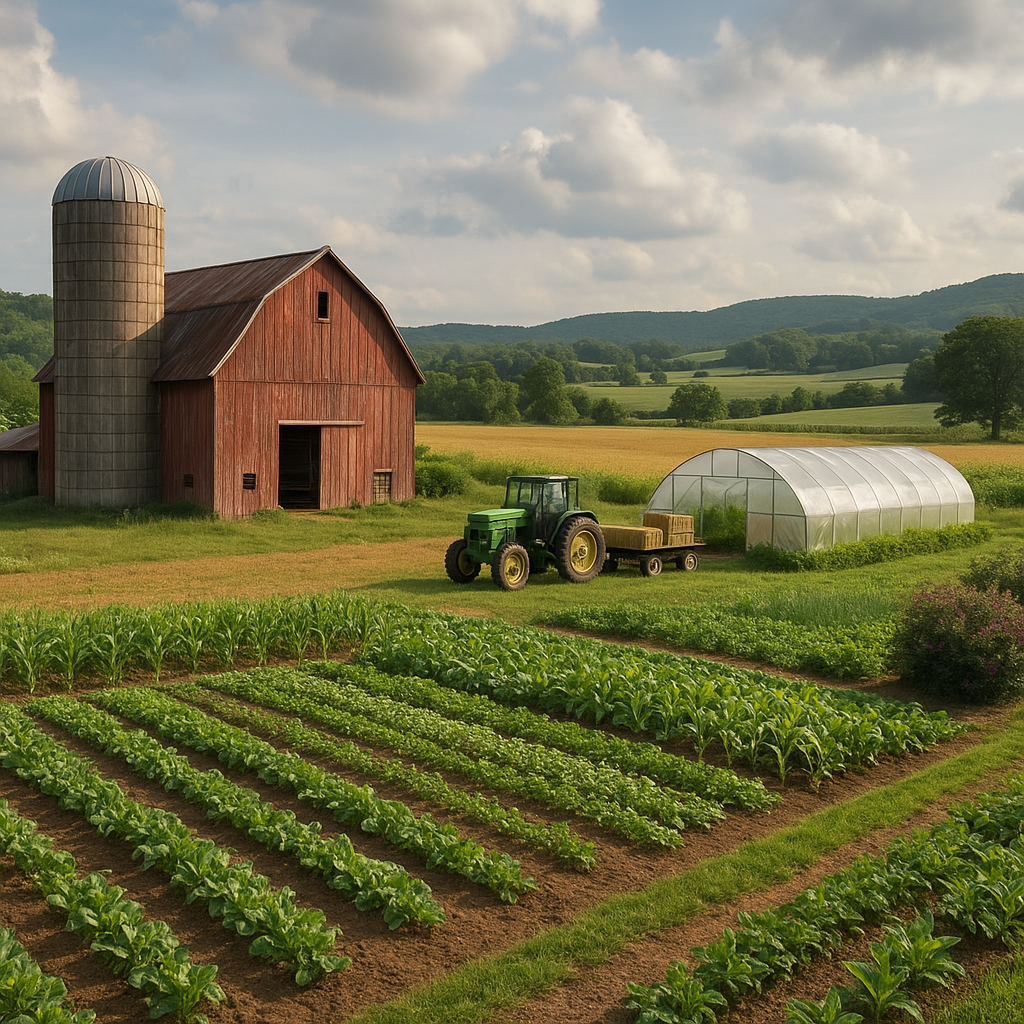
Developing a resilient farm requires integrating **innovative** practices that help adapt to unpredictable weather patterns, reduce vulnerability, and maintain productivity. By focusing on diversified systems, efficient water use, improved soil health, advanced technology, and robust infrastructure, you can transform your farm into a stronghold against climate shocks.
Diversifying Crop and Livestock Systems
Monocultures are particularly susceptible to climate disturbances like **drought**, pest outbreaks, and extreme heat. Diversification builds ecological balance and spreads risk.
Polycultures and Crop Rotation
- Interplanting cereals, legumes, and vegetables to promote natural pest control.
- Rotating deep-rooted plants with shallow-rooted ones to improve nutrient cycles.
- Incorporating cover crops such as clover or radish to fix nitrogen and reduce erosion.
Agroforestry and Windbreaks
Integrating **trees** and shrubs alongside crops creates microclimates that buffer temperature extremes, reduce wind damage, and enhance biodiversity:
- Alley cropping with fruit or nut trees between rows of annual crops.
- Contour hedgerows to prevent soil erosion on slopes.
- Windbreaks to protect livestock and minimize water loss through evapotranspiration.
Mixed Livestock Strategies
Grazing multiple species can optimize pasture usage and reduce parasite loads:
- Rotational grazing to allow pasture recovery and maintain plant vigor.
- Combining cattle with small ruminants like sheep or goats for diverse forage utilization.
- Silvopasture systems—integrating livestock with tree cover—for shade and fodder.
Implementing Water Management Strategies
Reliable water supply is essential for farm survival under shifting rainfall patterns. Efficient water use and **harvesting** techniques mitigate drought risks and reduce runoff during heavy rains.
Rainwater Harvesting and Storage
- Installing roof catchments and gutter systems directing water into storage tanks or ponds.
- Building swales, berms, and contour trenches to retain water in fields.
- Using small check dams in gullies to recharge groundwater and control erosion.
Efficient Irrigation Systems
Precision in water delivery optimizes plant health and conserves resources:
- Drip irrigation for targeted watering at the root zone, reducing evaporation.
- Subsurface drip lines buried beneath soil to minimize surface losses.
- Soil moisture sensors and automated controllers to schedule irrigation only when needed.
Water Recycling and Reuse
Treated wastewater can supplement irrigation demands, while runoff capture prevents nutrient loss:
- Constructed wetlands to filter farm effluent for safe reuse.
- Recirculating aquaculture systems for tilapia or catfish to reduce freshwater intake.
- Collecting and storing drainage water from greenhouses for later application.
Enhancing Soil Health and Fertility
Healthy soil acts as a buffer against climatic extremes by retaining moisture, supporting root growth, and cycling nutrients efficiently.
Building Organic Matter
- Applying compost, manure, or biochar to increase soil organic matter and water-holding capacity.
- Using green manures—fast-growing cover crops incorporated before flowering—to add biomass.
- Implementing no-till or reduced-till methods to preserve soil structure and microbial life.
Soil Testing and Balanced Nutrition
Regular analysis guides precise fertilizer applications, avoiding overuse or deficiencies:
- Testing for pH, macro- and micronutrients every 2–3 years.
- Applying lime or sulfur to adjust pH, enhancing nutrient availability.
- Using foliar sprays for quick micronutrient correction in stressed crops.
Biological Inoculants and Mycorrhizae
Beneficial microbes improve nutrient uptake and stress tolerance:
- Inoculating seeds or roots with nitrogen-fixing bacteria for legumes.
- Adding arbuscular mycorrhizal fungi to boost phosphorus absorption.
- Introducing compost teas rich in diverse microbial communities to suppress pathogens.
Utilizing Technology and Data-Driven Decisions
Modern tools can enhance resilience by optimizing inputs, monitoring conditions, and predicting risks.
Precision Agriculture Tools
- GPS-guided tractors and drones for precise planting, spraying, and scouting.
- Variable-rate applications of seed, fertilizer, and water based on soil maps.
- Remote sensing and multispectral imagery to detect crop stress before symptoms appear.
Climate and Soil Monitoring Systems
Real-time data informs timely interventions:
- Weather stations on-site to track rainfall, temperature, and humidity.
- Soil probes measuring moisture, salinity, and temperature at multiple depths.
- Mobile apps delivering forecasts and alerts for frost, heatwaves, or storms.
Decision Support and Risk Management
- Software platforms that integrate farm data into dashboards for easy analysis.
- Crop modeling to simulate yields under different scenarios and management practices.
- Insurance schemes linked to satellite-based indices for prompt compensation after **extreme** events.
Building Infrastructure for Extreme Weather
Robust facilities and on-farm structures reduce damage from floods, storms, and heat extremes.
Flood and Erosion Control
- Constructing raised beds and ridge systems to elevate crops above flood levels.
- Lining drainage channels with rock or vegetation to slow water flow.
- Planting deep-rooted grasses along waterways to stabilize banks.
Heat and Shelter Solutions
Protecting crops and livestock from heat stress preserves productivity:
- Installing shade nets or retractable screens over sensitive crops.
- Ensuring adequate ventilation and misting systems in animal housing.
- Utilizing reflective mulches to lower soil temperatures and conserve moisture.
Renewable Energy and Backup Systems
- Solar panels powering pumps, lighting, and sensors during grid failures.
- Wind turbines or small biogas digesters producing heat and electricity.
- Battery storage and generators to maintain critical irrigation and cold storage.