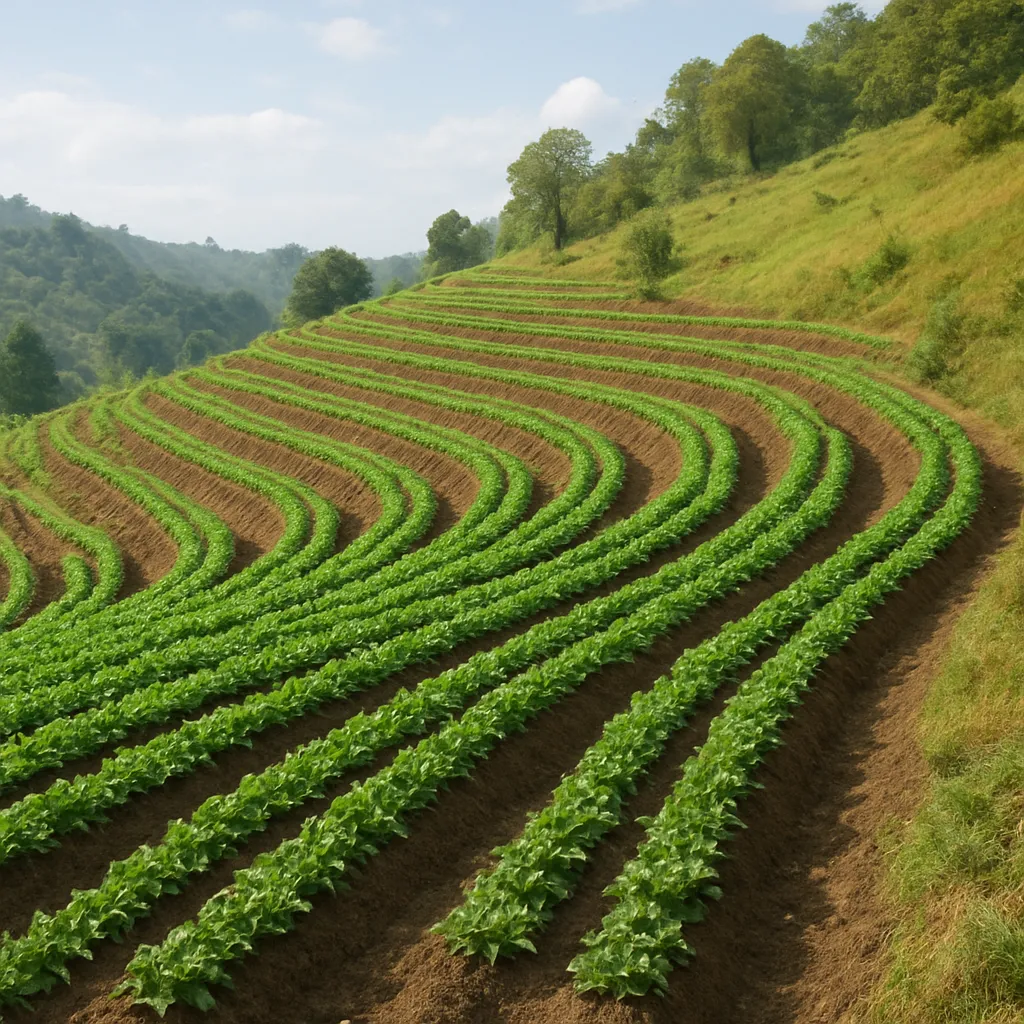
Crop production on sloped land requires careful planning and smart techniques to prevent soil loss, ensure water retention, and maintain long-term sustainability. With the right approach, hilly fields can become productive areas that yield healthy harvests while preserving the landscape. This article explores proven strategies for safe cultivation, covering terrain assessment, conservation structures, and adaptive management.
Understanding Sloped Terrain and Soil Erosion
Sloping fields accelerate runoff, which can strip away the topsoil and diminish fertility. Recognizing slope characteristics and soil behavior is the first step toward effective cultivation.
- Gradient Classification: Gentle (0–5%), Moderate (5–15%), Steep (>15%). Each category demands different practices to control erosion and runoff velocity.
- Soil Texture and Structure: Sandy soils exhibit rapid drainage but low nutrient retention; clay soils hold more water but risk compaction under heavy machinery.
- Surface Cover: Bare soil increases erosion; vegetative or residue cover reduces raindrop impact and slows water flow.
Mapping slope orientation and measuring contour lines help farmers position terraces and drainage channels to intercept water before it erodes critical soil horizons.
Designing Effective Soil Conservation Structures
Integrating physical barriers and landscape modifications can drastically reduce soil loss and improve moisture infiltration.
Contour Farming
Planting along natural elevation lines, known as contour farming, forms water-catching ridges that slow runoff. Key guidelines include:
- Maintain Equipment Accuracy: Use laser-guided or GPS-assisted implements to ensure consistent contour alignment.
- Spacing: Ridges should be spaced according to slope steepness; closer spacing on steeper gradients.
- Crop Strips: Alternate wide strips of cash crops with narrow grass or legume strips to trap sediment.
Terracing and Bench Farming
Terracing transforms slopes into a series of flat steps or benches, reducing velocity of water flow and allowing surface water to infiltrate evenly.
- Construction: Earth-moving equipment shapes terraces; compact the base to prevent collapse but avoid over-compaction that limits root growth.
- Drainage Outlets: Incorporate spillways or rock-lined channels at intervals to safely direct excess water downslope.
- Maintenance: Regrade terraces annually after heavy rains to repair any washouts.
Check Dams and Grass Strips
Small earthen or stone check dams in gullies and narrow grass strips across slopes reduce concentrated flow and trap sediment particles.
- Placement: Install at regular intervals where runoff converges.
- Materials: Use locally available stone, brushwood, or biodegradable erosion-control blankets.
- Vegetation: Establish deep-rooted grasses to bind soil and further slow water movement.
Optimizing Crop Selection and Planting Techniques
Plant choice and planting methods significantly influence soil health and water management on sloped fields.
Cover Crops and Crop Rotation
Introducing cover crops such as clover, rye, or vetch between main crops protects the soil, adds organic matter, and fixes nitrogen.
- Rotation Planning: Alternate deep-rooted crops with shallow-rooted ones to break up compaction layers and improve structure.
- Green Manure: Incorporate cover crops before flowering to maximize biomass and nutrient availability.
- Residue Management: Leave a portion of residue on the surface to maintain continuous soil cover.
Mulching and Organic Matter
A thick layer of organic mulch maintains soil moisture, moderates temperature fluctuations, and suppresses weeds.
- Materials: Straw, wood chips, compost, or shredded bark—choose based on availability and decomposition rate.
- Depth: Apply 5–10 cm to balance moisture conservation without hindering seedling emergence.
- Replenishment: Top up mulch annually to sustain a protective layer.
Water Management and Drainage Systems
Proper channels and fosters help avoid waterlogging near row crops and concentrate infiltration where needed.
- Open Ditches: Gently sloping ditches collect excess water and guide it to storage ponds or buffer strips.
- Subsurface Drains: Perforated pipes installed at depth enhance leaching of salts and prevent saturation in heavy soils.
- Swales and Infiltration Basins: Broad shallow depressions along contours allow water to pond and seep into ground.
Maintenance and Long-term Sustainability
Ongoing monitoring and adaptive practices ensure that soil conservation measures remain effective over multiple seasons.
Monitoring Soil Health
Regular soil tests and field observations reveal trends in fertility, organic matter content, and pH balance.
- Physical Assessments: Check for signs of compaction, rill formation, or bare patches after storms.
- Nutrient Analysis: Adjust fertilization based on test results to avoid nutrient runoff.
- Biological Indicators: Earthworm counts and microbial activity assays help gauge ecosystem recovery.
Adaptive Management Approaches
Climate variability and evolving market demands call for flexible strategies.
- Alternate Tillage Methods: Switch between no-till, reduced-till, and strip-till to optimize residue cover and soil structure.
- Dynamic Crop Mix: Introduce new varieties or species suited to changing moisture regimes or pest pressures.
- Community Collaboration: Share experiences with neighboring farmers to refine practices and leverage collective knowledge.
By integrating terrain assessment, structural conservation, smart crop choices, and vigilant upkeep, farmers can transform sloped land into reliable acreage that safeguards soil, maximizes yield, and supports long-term sustainability. Careful design and continuous learning make hillside agriculture both productive and environmentally responsible.