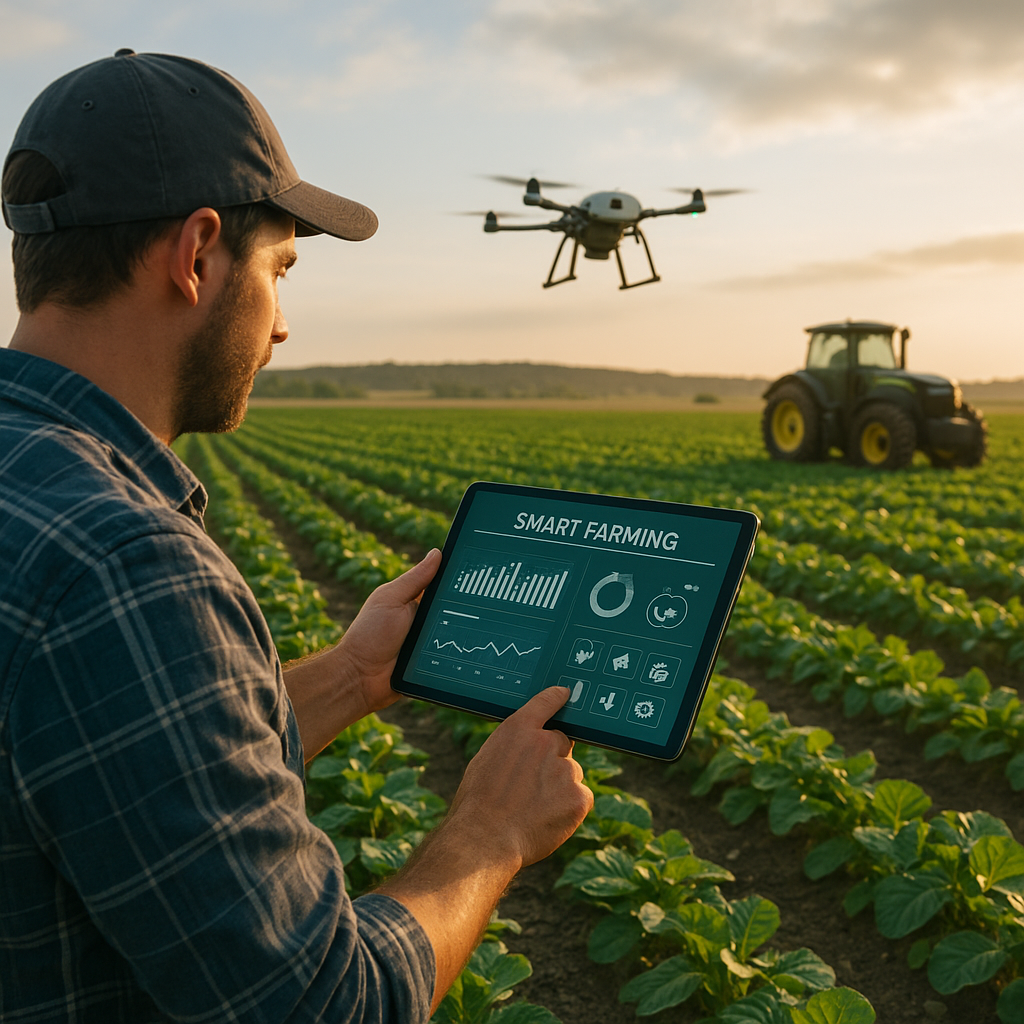
Smart farming is revolutionizing the way we cultivate crops and manage livestock. By leveraging cutting-edge technologies, farmers can achieve higher yields, reduce waste, and conserve precious resources. This article explores the latest innovations, practical tips, and emerging trends that will shape the future of agriculture. Whether you’re a seasoned agronomist or a newcomer interested in sustainable practices, you’ll discover how to harness the power of modern tools to improve productivity and environmental stewardship.
Advancements in Precision Agriculture
Precision agriculture is transforming fields into data-rich environments. Farmers can now rely on sensors, satellite imagery, and GPS-guided equipment to gather real-time information on soil moisture, nutrient levels, and crop health. By applying inputs only where they are needed, growers can minimize chemical use and optimize resource allocation. For example, variable-rate technology allows the selective application of fertilizers and pesticides, resulting in more uniform crop performance and reduced environmental impact.
- Soil mapping: Identify low- and high-yield zones for targeted treatment.
- Automated irrigation: Adjust water application based on live sensor feedback.
- Yield monitoring: Track harvest data to evaluate performance across the field.
The integration of drones for aerial surveillance offers an extra layer of insight. These unmanned aerial vehicles can capture high-resolution images to detect early signs of disease, pest infestations, or water stress. By combining drone data with ground-based observations, farmers achieve a comprehensive view of crop status, enabling proactive interventions.
Integration of IoT and AI in Modern Farms
The Internet of Things (IoT) and machine learning are driving a new era of smart farming solutions. Networked devices installed across the farm collect vast amounts of data, which AI algorithms then analyze to predict trends and recommend actions. This digital transformation empowers producers to make data-driven decisions with unprecedented accuracy.
- Predictive analytics: Forecast weather impacts and pest outbreaks.
- Automated machinery: Self-driving tractors and robotic harvesters reduce labor costs and improve efficiency.
- Livestock monitoring: Wearable sensors track animal health, behavior, and nutrient intake.
Robotics is playing a growing role in tasks such as planting, weeding, and harvesting. By deploying autonomous robots, farmers can address labor shortages and maintain consistent operations around the clock. The synergy between IoT connectivity and robotic platforms enhances precision in seeding patterns and crop handling, ultimately boosting overall productivity.
Strategies for Sustainable Resource Management
Sustainability has become a central focus for the agriculture sector. Water scarcity, soil degradation, and climate change demand innovative approaches to protect natural resources. Adopting a conservation-minded mindset ensures long-term viability while meeting global food demands.
Water Efficiency Techniques
Implementing drip irrigation systems and rainwater harvesting reduces dependence on external water sources. Paired with smart sensors, these systems deliver moisture directly to plant roots, cutting evaporation losses. Farmers can track water usage patterns and adjust schedules to align with plant growth stages.
Soil Health and Crop Rotation
Maintaining soil fertility is essential for sustained productivity. Regular soil testing, cover cropping, and diversified crop rotations enrich organic matter and prevent erosion. These practices also enhance climate resilience by improving the soil’s ability to retain moisture during droughts and buffer against extreme weather.
- Introduce legumes to fix nitrogen naturally.
- Use green manures to boost organic content.
- Monitor pH and nutrient levels annually.
An emphasis on resource stewardship not only preserves the environment but also reduces operational costs. By conserving inputs and protecting ecosystems, farms can achieve a profitable balance that benefits both producers and the planet.
Maximizing Yield Optimization with Data-Driven Decisions
Yield optimization goes beyond simply planting more seeds. It involves a holistic approach that integrates agronomic knowledge, data insights, and continuous monitoring. Leveraging digital platforms helps farmers understand and respond to microclimatic variations across their land.
- Spatial analytics: Divide fields into management zones for tailored care.
- Crop modeling: Simulate growth scenarios under different weather conditions.
- Real-time alerts: Receive notifications for anomalies such as nutrient deficiencies or pest outbreaks.
Successful producers use dashboards and mobile apps to visualize key performance indicators, enabling them to refine plant population densities and optimize planting dates. These adjustments can lead to significant yield improvements while safeguarding against overproduction and market volatility.
Preparing for Future Challenges and Opportunities
The agricultural landscape is constantly evolving. Emerging challenges such as labor shortages, fluctuating commodity prices, and regulatory changes require adaptable solutions. At the same time, new opportunities arise from advances in biotechnology, renewable energy integration, and circular economy models.
Biotechnology Innovations
Genetically edited crops and microbial inoculants hold promise for enhancing pest resistance and nutrient uptake. By reducing reliance on synthetic chemicals, these biological tools contribute to healthier ecosystems and improved crop quality.
Renewable Energy on the Farm
Solar panels, wind turbines, and biogas digesters can transform farms into energy producers. Generating renewable power on-site cuts utility expenses and diversifies income streams through carbon credits or surplus energy sales.
- Install solar-powered water pumps.
- Convert animal waste into biogas for heating.
- Explore agrivoltaics: combining crop production with solar arrays.
Embracing innovation and maintaining a learning mindset are key to thriving in a dynamic environment. Collaboration with research institutions, technology providers, and fellow farmers fosters the exchange of best practices and stimulates collective progress.
Actionable Tips for Adopting Smart Farming Practices
Transitioning to a high-tech farm requires careful planning. Here are practical steps to get started:
- Conduct a technology audit to identify gaps and priorities.
- Invest in scalable solutions that align with farm size and budget.
- Train staff on data interpretation and equipment handling.
- Establish pilot projects to test new tools before full deployment.
- Track performance metrics consistently to measure return on investment.
By following these guidelines, farmers can navigate the complexity of smart farming and enjoy the benefits of enhanced productivity, sustainability, and resilience in a rapidly changing world.