Effective water management is a cornerstone of successful small-scale agriculture. Farmers who adopt the right irrigation techniques can maximize crop productivity, reduce operational costs, and promote environmental sustainability. This article examines several irrigation methods suited for small farms, highlighting their benefits, challenges, and practical implementation steps.
Selecting the Right Irrigation System for Small-scale Farming
Choosing the best irrigation approach begins with evaluating site-specific factors. Consider soil texture, topography, water source capacity, and crop requirements. A system that works for one plot may not suit another due to variations in soil infiltration rates or slope gradients. By conducting a thorough site assessment, farmers can align their irrigation strategy with both agronomic needs and resource availability.
- Soil analysis for soil moisture retention
- Water source reliability and flow rate measurement
- Crop water demand based on growth stage
- Energy requirements for pumping and delivery
- Long-term cost projections and maintenance
Drip Irrigation: Efficiency and Water Conservation
Advantages of drip irrigation
Drip irrigation delivers water directly to the plant root zone through emitters and tubing. This method minimizes evaporation and runoff, resulting in up to 70% higher efficiency compared to flood irrigation. Uniform water distribution promotes consistent growth, reduces weed pressure, and limits foliar diseases by keeping foliage dry.
Implementation steps
- Design layout including mainline, submains, and laterals
- Select emitters with appropriate discharge rates (e.g., 0.5–4 gph)
- Install pressure regulators and filtration systems
- Flush lines before planting to prevent clogging
- Monitor emitter performance regularly
Common mistakes to avoid
- Ignoring water quality—sediment and minerals can block emitters
- Over-pressurization without regulators
- Improper spacing of emitters relative to root spread
- Failing to winterize or store components properly
Sprinkler Systems: Versatility and Coverage
Types of sprinklers
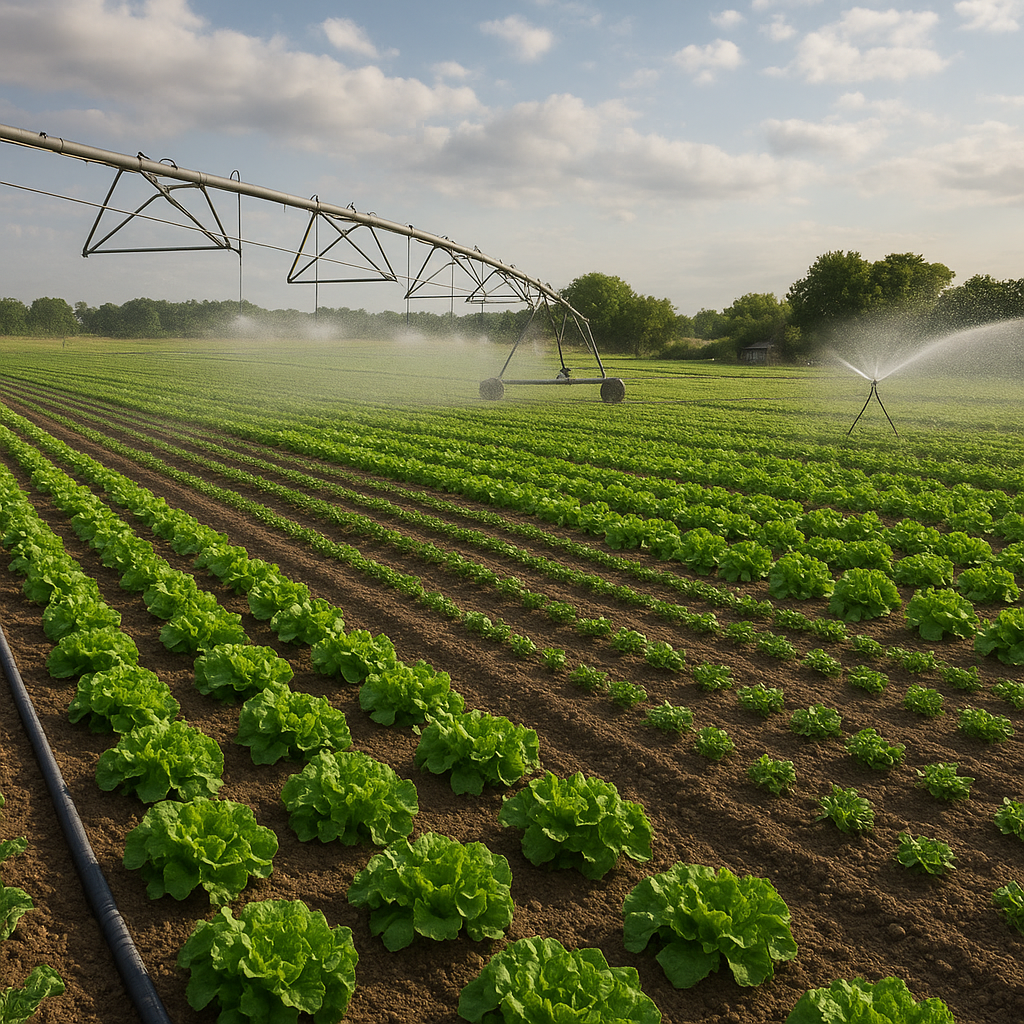
Sprinkler irrigation offers broad coverage and can adapt to row crops, orchards, or pastures. Systems range from portable pop-up heads to fixed overhead units and traveling sprinklers. Each type provides distinct wetting patterns and operational flexibility.
- Impact sprinklers for large zones
- Rotary nozzles for uniform droplet distribution
- Misting systems for nursery plants and seedlings
- Center-pivot or lateral-move for bigger blocks (when feasible)
Best practices
- Calibrate spacing to ensure even water application
- Use windbreaks to reduce drift
- Schedule irrigation during low wind and moderate temperature periods
Maintenance tips
- Inspect nozzles for clogs and wear
- Check hoses and connections for leaks
- Monitor pressure to maintain target flow rates
Surface Irrigation: Traditional Methods
Furrow and basin irrigation
Surface or flood irrigation remains popular due to low initial costs and simple operation. Furrows—narrow channels between crop rows—guide water along the field, whereas basins confine water around individual plants or trees. This method performs well on flat lands with efficient water-holding soils like clay loams.
Micro-sprinklers in surface irrigation
Combining surface flow with micro-sprinklers can improve distribution uniformity. These low-flow emitters introduce water at the basin edge to assist in uniform infiltration.
Advantages and constraints
- Pros: Low infrastructure cost, minimal energy needs
- Cons: Potential for erosion, high labor input, less precise water control
Innovative Techniques and Technologies
Sensor-based irrigation management
Advances in moisture sensors and automated controllers enable precise scheduling. Real-time data on soil water content triggers irrigation events only when necessary, cutting water waste and optimizing plant uptake.
Rainwater harvesting integration
Harvesting and storing rainwater in tanks or ponds can supplement well or mains supply, decreasing dependency on external sources. Coupled with gravity-fed drip lines, this approach reduces energy consumption.
Solar-powered pumps
Solar pumping systems harness sunlight to lift water, offering a sustainable alternative to diesel or grid electricity. They pair effectively with low-pressure drip or sprinkler networks, particularly in remote areas.
Economic Considerations and Sustainability
Cost analysis
Initial investment varies by system complexity. While drip irrigation often entails higher upfront costs for tubing and filters, it yields savings through reduced water and fertilizer use. Sprinklers require moderate capital but can service diverse crop types.
Long-term benefits
- Lower utility bills via reduced pumping hours
- Higher yield stability under water stress
- Improved fruit quality and uniformity
- Enhanced resource conservation credentials for market premiums
Grants and subsidies
Governments and NGOs frequently offer financial incentives for water-saving technologies. Investigate local rebate programs to offset installation expenses.
Practical Advice for Implementation
Site assessment
Before purchasing equipment, conduct a detailed survey of soil type, field slope, and water source. Use soil probe readings to map moisture variability across zones.
Design and layout
Create a scaled blueprint incorporating distribution lines, valves, filters, and control units. Map out hydrants or manifold points to facilitate future expansion.
Scheduling and automation
Employ timers or smart controllers capable of adjusting run times based on weather forecasts or sensor feedback. Automation helps maintain optimal soil moisture without constant manual intervention.