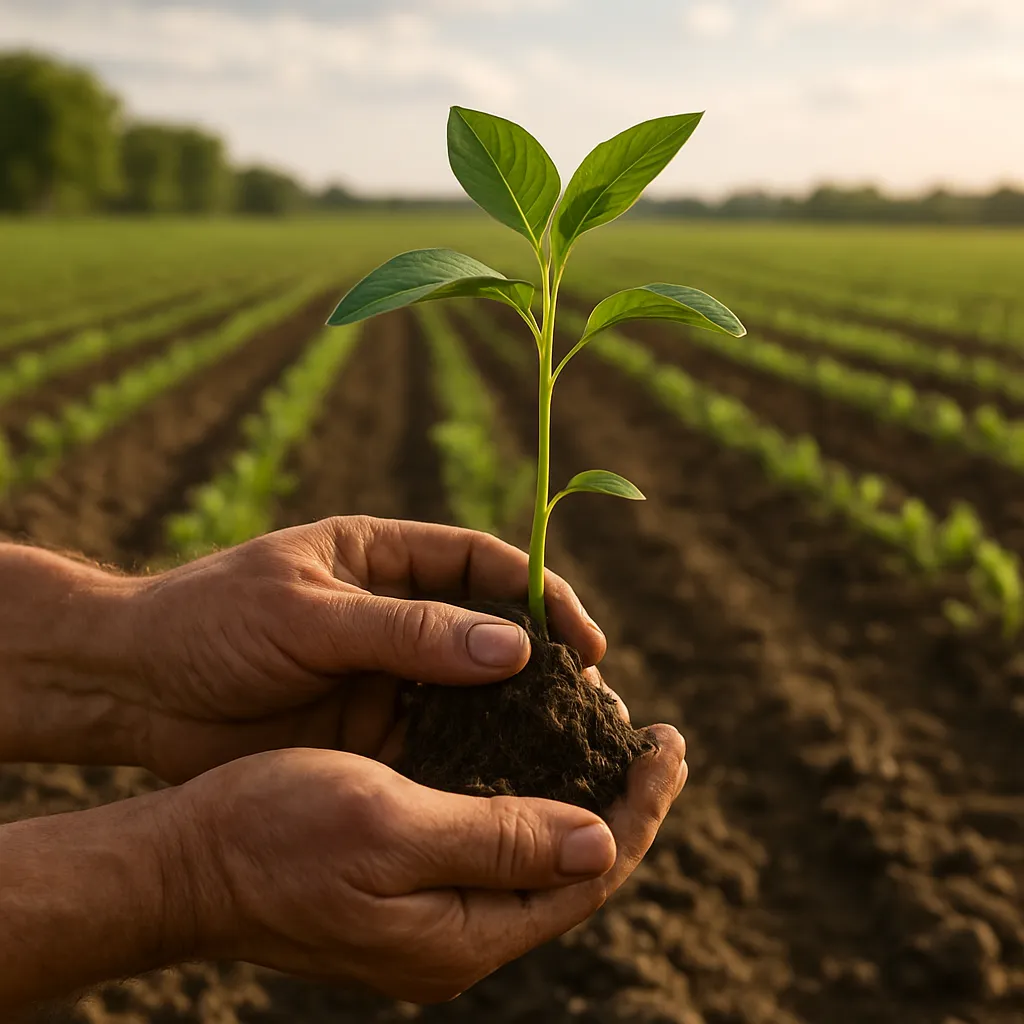
Managing crops well is both a science and an art. Weather extremes, changing markets, and rising input costs mean that every decision in the field matters more than ever. Many growers search for reliable crop farming tips to increase yields, protect soil, and make smarter use of resources. Practical crop management today involves more than simply planting and harvesting; it requires careful planning, constant observation, and quick responses to problems. By improving how you handle soil, seeds, water, pests, and data, you can turn each season into a learning opportunity. This article offers clear, field-tested advice that can be adapted to different climates, farm sizes, and production goals, helping you build a more **resilient** and **profitable** cropping system.
Understanding Your Soil as the Foundation
Healthy soil is the base of every successful field. Before thinking about fertilizers, pesticides, or machinery, invest time in understanding what your soil can and cannot provide. Regular soil testing helps you track pH, organic matter, and nutrient levels. Use the results to create a simple nutrient plan instead of guessing with random applications. When you know whether your soil is acidic, neutral, or alkaline, you can choose the right amendments and avoid wasting inputs.
Focus on building **organic** matter through cover crops, compost, or well-managed manure. Higher organic matter improves **structure**, water-holding capacity, and biological activity. Soils with good structure have stable aggregates that allow roots to move easily and air to circulate. This reduces compaction problems and improves drainage after heavy rains. Avoid working the soil when it is too wet, as this breaks down aggregates and leads to crusting and erosion.
Rotating crops with different root depths is another way to support soil health. Deep-rooted species help open compacted layers, while fibrous roots create a dense network that protects the surface from erosion. Over time, these biological tools can reduce the need for heavy mechanical tillage, saving fuel and preserving soil life.
Planning Crop Rotations with Clear Goals
Effective crop rotation is one of the most powerful tools for better crop management. Instead of repeating the same crop every year, design a sequence that interrupts pest and disease cycles, balances nutrient demand, and stabilizes yields. For example, following a demanding cereal crop with a legume helps replenish nitrogen naturally, while including a broadleaf crop can disrupt weed populations that prefer grasses.
When planning rotations, list your main objectives: lowering fertilizer costs, reducing disease pressure, controlling weeds, or improving soil structure. Then choose crops that support those objectives. Legumes, such as peas, beans, or clovers, fix atmospheric nitrogen and improve biological activity. Root crops can help manage certain weeds and loosen subsoil layers if managed correctly.
Try to alternate crops with different planting and harvest dates. This spreads labor more evenly and avoids peak bottlenecks. It also reduces the risk that one extreme weather event will damage your entire farm at the same time. Keeping clear records of yields, problems, and management in each rotation phase allows you to adjust the sequence to your local conditions every few years.
Choosing High-Quality Seed and Varieties
Seed is a relatively small share of total cost, but it has a huge impact on performance. Always use certified or otherwise verified seed to avoid hidden problems such as seed-borne diseases or poor germination rates. Select varieties based on local trials and your specific field conditions, not only on marketing claims.
Look for traits that directly improve resilience: disease resistance, tolerance to drought or excessive moisture, and ability to perform under moderate nutrient levels. Early-maturing varieties may help you escape late-season drought or frost, while longer-season types can deliver higher potential yields where the climate allows. If pest or disease pressure is high, choose varieties with known resistance to reduce dependence on chemical control.
Calibrate your seeding rate carefully. Overly dense stands may increase disease risk and lodging, while low populations leave room for weeds. Match seeding depth to soil type and moisture; small seeds usually need shallower placement, while larger seeds can be planted deeper into moist soil. Check emergence shortly after planting and adjust future practices based on what you see in the field.
Improving Planting Timing and Field Preparation
Correct planting timing is one of the most practical levers for better crop management. Planting too early may expose seedlings to cold stress and seedling diseases, while planting too late can reduce yield potential and increase exposure to late-season pests. Base your planting window on soil temperature, moisture levels, and long-term climate patterns rather than on calendar dates alone.
Prepare a firm but not compacted seedbed. A fine surface layer helps ensure good seed-soil contact, which is essential for uniform germination. However, excessive tillage breaks down soil structure and leaves the field more vulnerable to erosion and crusting. Where possible, consider reduced-tillage or strip-till approaches that preserve residue on the surface while still providing a good environment for seed placement.
Use simple field checks before planting. Dig a few spots across the field to assess moisture distribution and the presence of compaction layers. If you find a hard layer just below tillage depth, consider mechanical or biological methods to relieve it, such as using deep-rooted cover crops in the following season.
Smart Water Management and Irrigation
Water is often the most limiting factor in crop production. Even in regions with reliable rainfall, uneven distribution across the season can cause stress at sensitive growth stages. Effective water management starts with improving infiltration and storage through good soil structure and residue cover.
For irrigated farms, scheduling is more important than system type. Monitor soil moisture with simple tools or sensors and aim to irrigate before plants reach severe stress, but avoid saturating the profile. Frequent, shallow irrigation tends to encourage shallow rooting and increases disease risk. Longer, less frequent events usually support deeper root systems and more stable crops.
On rainfed farms, focus on practices that conserve moisture. Leaving crop residues on the surface reduces evaporation and shields the soil from high temperatures. Windbreaks, contour planting, and maintaining ground cover help slow runoff and increase infiltration. Matching planting density and variety choice to the local water availability can prevent crops from exhausting soil moisture too early in the season.
Integrated Nutrient Management
Balanced nutrition is key for strong, productive plants. Rather than relying only on mineral fertilizers, combine organic and inorganic sources in a way that fits your system. Organic amendments, such as manure or compost, supply nutrients and also feed soil life, which in turn makes more nutrients available over time. Mineral fertilizers allow precise correction of specific deficiencies and rapid responses when crops show symptoms.
Base fertilizer decisions on soil test results and realistic yield goals. Applying more nutrients than the crop can use does not increase profits; it raises costs and can lead to environmental problems. Time applications to crop demand: for example, splitting nitrogen into several doses reduces losses and matches peak uptake stages. Pay attention to micronutrients as well, particularly in sandy or highly weathered soils.
Observe the crop regularly for deficiency symptoms such as chlorosis, stunting, or abnormal leaf colors. Combine visual observations with records from previous seasons to refine your nutrient strategy. Over time, consistent **monitoring** and adjustment lead to more efficient input use and healthier plants.
Integrated Pest, Disease, and Weed Management
Relying only on chemical controls for pests, diseases, and weeds is rarely sustainable. Integrated management combines cultural, mechanical, biological, and chemical methods to keep harmful organisms below damaging levels. This approach reduces resistance risks and often lowers total control costs.
Cultural measures include crop rotation, resistant varieties, optimal planting dates, and balanced fertilization. Healthy, well-fed plants are better able to tolerate or resist attack. Mechanical control might involve timely cultivation, mowing field edges, or hand removal of early weed patches before they spread.
Biological control uses natural enemies such as predators, parasitoids, or beneficial microbes. Even if you do not deliberately release such organisms, you can support them by maintaining field margins with flowering plants and reducing unnecessary pesticide applications that harm beneficial species.
Chemical tools remain important, but they should be applied carefully. Choose products with different modes of action to prevent resistance and always follow label instructions. Spray based on economic thresholds, not habit; this means treating only when pest levels are high enough to threaten yield more than the cost of control. Rotate active ingredients and integrate non-chemical tactics to keep your toolbox effective for the long term.
Using Field Scouting and Data for Decisions
Regular field scouting is central to modern crop management. Walk your fields at least once a week during the growing season, and more often during high-risk periods. Look for early signs of stress: uneven emergence, color changes, insect damage, weed escapes, or disease spots. Early detection usually means easier and cheaper correction.
Combine scouting notes with simple digital tools to build a history of each field. Record planting date, variety, fertilizer rates, pest issues, and weather events. Over several seasons, patterns become visible. You may notice that certain low-lying areas suffer from standing water, or that a particular rotation reduces disease pressure significantly.
Precision tools such as yield maps, satellite images, or soil conductivity surveys can further refine your understanding. Even basic maps that mark problem zones help you target interventions. For example, you may decide to apply extra lime only in acidic patches rather than across the whole field, or to adjust seeding rates on lighter soils that struggle in dry periods.
Adapting to Climate Variability and Risk
Climate variability is now a permanent factor in crop planning. Hotter summers, intense storms, and unexpected frosts all affect yields and management. To cope, aim for **resilience** rather than perfection. This means designing systems that can handle extremes without collapsing.
One practical approach is diversification. Plant more than one crop species or variety, and if possible, spread planting dates slightly to avoid having everything at the same stage during a risky period. Consider varieties with different maturity lengths to reduce the chance that all fields face stress at the same time.
Invest in practices that protect the soil surface, such as cover crops and residue retention, as they reduce both drought and flooding damage. Where feasible, improve drainage in damaged areas and consider installing or maintaining simple water-harvesting structures. Keep an updated emergency plan for events like hail or unexpected frost, including options for replanting or switching to shorter-season crops.
Managing Labor, Machinery, and Costs
Good crop management also involves smart use of labor and machinery. Before the season starts, schedule key operations such as planting, fertilizing, spraying, and harvest, and check that all equipment is serviced and calibrated. Breakdowns during critical windows can cause more yield loss than many agronomic problems.
Choose machinery that matches your field size and typical weather conditions. Oversized equipment may cause compaction and unnecessary fuel use, while undersized equipment may not complete tasks on time. Reducing the number of passes across the field saves time and protects soil structure.
Track production costs carefully. Knowing the real cost per hectare and per ton helps you decide which practices deliver value. Sometimes, spending a bit more on a **reliable** seed treatment, better nozzles, or high-quality wear parts pays off by preventing failures during stress conditions. Use simple budgets to evaluate new technologies before adopting them widely.
Continuous Learning and Farmer-to-Farmer Exchange
Crop management is not static. New pests appear, input prices change, and fresh research produces new ideas. Make continuous learning part of your routine. Take notes after each season about what worked, what failed, and what you want to test next year. Treat your farm as a long-term experiment where you refine practices step by step.
Farmer-to-farmer exchange is often the quickest way to discover practical solutions. Visiting neighboring farms, joining local groups, or participating in on-farm trials gives you access to real-world experiences. When you see a promising practice, try it first on a small area rather than across your entire farm. Compare results carefully before making big changes.
Over time, a combination of field observation, simple records, and shared knowledge will help you build a **sustainable** and **productive** cropping system that suits your land, climate, and goals. By focusing on soil health, rotation, water, nutrients, pests, and data-driven decisions, you create a resilient foundation that supports better crop performance year after year.