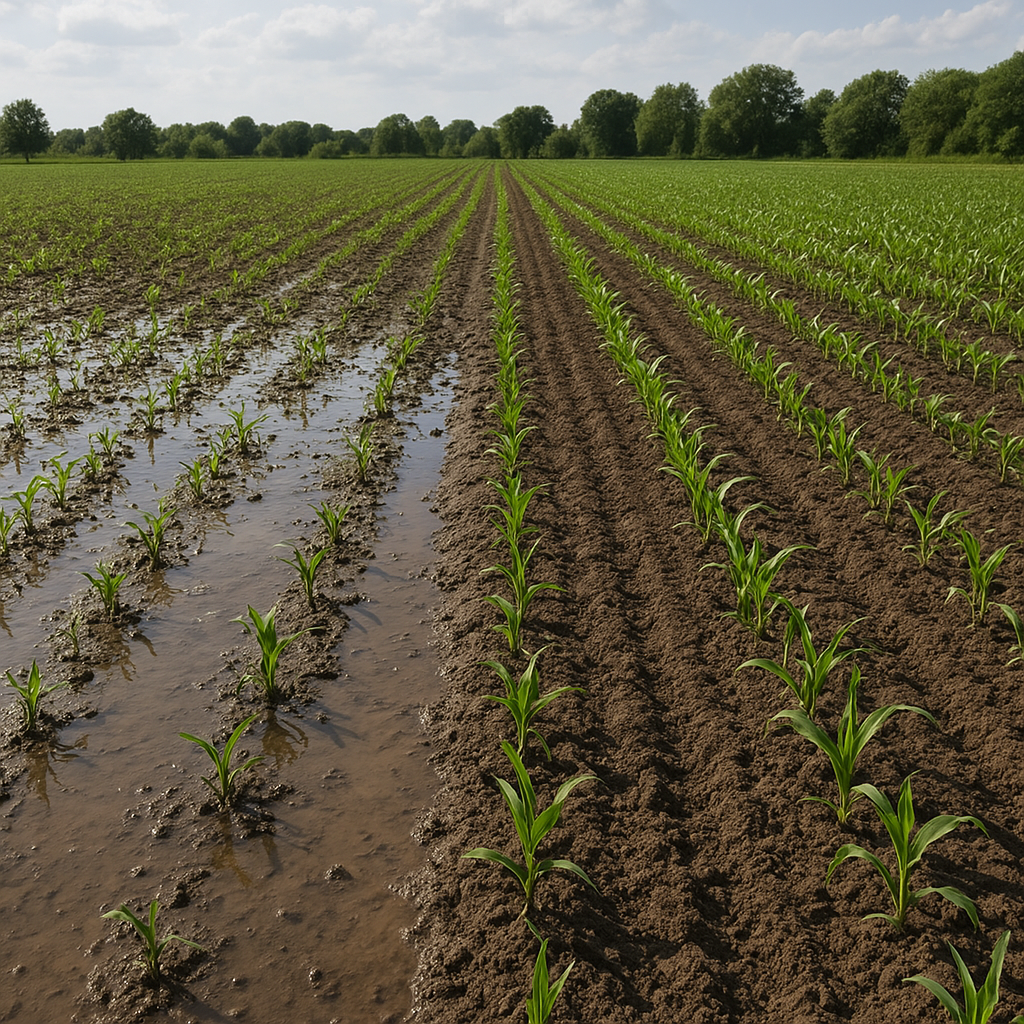
Excess water accumulation in crop fields can lead to reduced oxygen levels around plant roots, stunted growth, and even crop failure. Understanding how to prevent waterlogging is crucial for maintaining healthy fields and maximizing crop yield. This article explores several strategies that farmers and agronomists can implement to manage excess moisture and ensure optimal growing conditions.
Understanding Waterlogging and Its Causes
Waterlogging occurs when soil pores become saturated with water, depriving plant roots of essential oxygen. Several factors contribute to this phenomenon:
- Heavy rainfall or prolonged irrigation
- Poor natural drainage due to soil texture (e.g., clayey soils)
- High water table near the surface
- Compacted soil layers that limit percolation
- Topographical depressions where water tends to accumulate
Roots in waterlogged soil experience hypoxia, which inhibits nutrient uptake and promotes the growth of harmful anaerobic microorganisms. By recognizing the underlying causes, farmers can select targeted solutions to keep fields adequately drained.
Effective Drainage Techniques
Implementing proper drainage systems is the cornerstone of waterlogging prevention. Consider the following methods:
- Surface Drainage: Graded ditches, open trenches, and contour furrows can redirect excess water away from vulnerable areas.
- Subsurface Drainage: Installation of perforated pipes or tile drains below the soil surface allows water to be collected and transported to a suitable outlet.
- Slope Management: Adjusting land contours through precision land leveling enhances uniform water runoff and minimizes pooling.
- Controlled Traffic Farming: Restricting heavy machinery to specific wheel tracks reduces soil compaction, maintaining natural permeability and facilitating water movement.
Regular maintenance of drainage channels and pipes is critical. Debris and sediment build-up can block water flow, rendering the system ineffective. Routine inspections, especially after heavy rains, help ensure continuous operation.
Soil Management Practices
Healthy soil structure is a natural defense against waterlogging. Farmers should adopt practices that improve aeration and increase infiltration rates:
- Conservation Tillage: Reduced or no-till methods preserve soil aggregates, enhance organic content, and maintain pore spaces for water movement.
- Organic Matter Addition: Incorporating compost, green manure, or crop residues boosts soil structure and raises water-holding capacity in a balanced way.
- Deep Ripping or Subsoiling: Breaking up compacted layers encourages root penetration and vertical water percolation.
- Cover Cropping: Plants like radish or ryegrass develop extensive root systems that create channels in the soil, improving permeability and reducing surface runoff.
By maintaining a robust soil profile, fields can handle fluctuating moisture levels without becoming waterlogged.
Crop Selection and Rotation Strategies
Choosing the right crops and sequences can mitigate waterlogging risks. Certain plants tolerate wet conditions better or can actively help manage soil moisture:
- Water-Tolerant Crops: Rice, taro, and some varieties of millet thrive in high-moisture environments and can be integrated into rotation plans.
- Deep-Rooted Plants: Species such as alfalfa or sunflowers draw moisture downward, facilitating drying in the upper soil layers.
- Diverse Rotations: Alternating cereals, legumes, and cover crops avoids monotonous root patterns, improving soil structure and reducing disease pressure.
- Adaptive Sowing Dates: Early or late planting windows can avoid peak rainy seasons, lessening the duration that fields remain wet.
Dynamic selection and rotation of crops not only enhance resilience against waterlogging but also contribute to overall sustainability and soil health.
Monitoring and Maintenance
Effective prevention of waterlogging is an ongoing process requiring consistent observation and upkeep:
- Soil Moisture Sensors: Deploy probes or capacitance sensors to track moisture levels at different depths, providing data-driven irrigation decisions.
- Weather Forecasting: Align farm operations with rainfall predictions to adjust irrigation scheduling and field access.
- Inspection Routines: Check drainage inlets, outlets, and ditches frequently. Remove obstacles like weeds, silt, and debris.
- Record Keeping: Document drainage performance, crop responses, and maintenance activities to refine management strategies over time.
Continuous monitoring allows for rapid response to emerging waterlogging threats, safeguarding root health and maximizing productivity.
Advanced Approaches and Innovations
Emerging technologies and research offer new tools to combat waterlogging:
- Smart Irrigation Systems: Automated drip or sprinkler setups equipped with moisture feedback loops minimize excess water application.
- Biological Amendments: Specific microbial inoculants can improve soil structure and promote aerobic conditions around roots.
- Geotextiles and Artificial Substrates: Placing permeable layers within the root zone can enhance vertical water movement and prevent surface saturation.
- GIS and Remote Sensing: Satellite imagery and drone surveys identify waterlogged zones in real time, guiding targeted interventions.
Integrating advanced solutions with traditional practices paves the way for resilient and highly efficient agricultural systems.