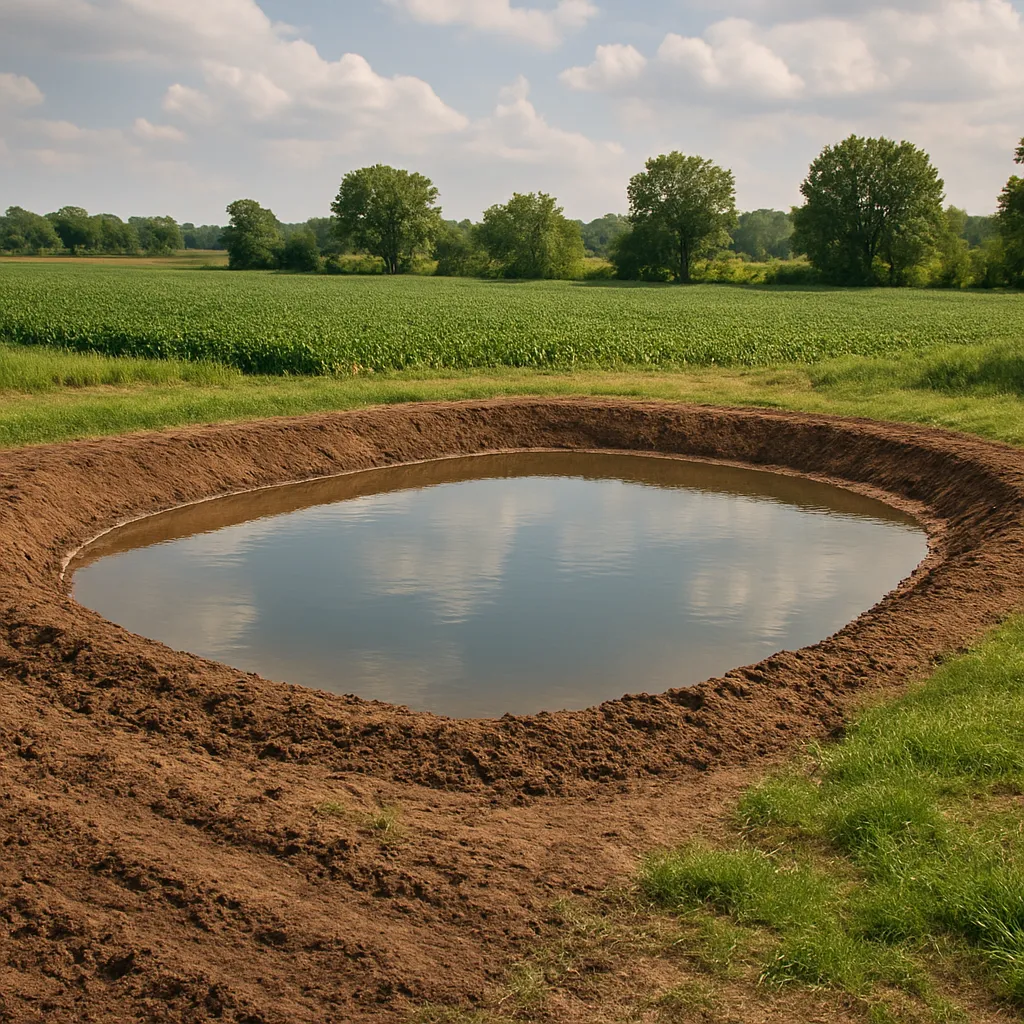
Building a small farm pond for irrigation is a rewarding venture that can provide a reliable source of water for your crops, enhance biodiversity on your property, and contribute to effective water management. By carefully planning each stage—from selecting the right location to installing a durable lining and creating an efficient inlet-outlet system—you’ll ensure the pond serves its purpose for years to come.
Site Selection and Planning
Selecting an appropriate site is the cornerstone of a successful pond project. You’ll need to consider topography, soil type, and proximity to your fields. A well-chosen spot will minimize excavation costs and maximize water retention.
Topographical Assessment
- Identify a natural depression or low-lying area with gentle slopes to reduce earthmoving.
- Ensure the site is at a higher elevation than the fields you intend to irrigate for gravity-fed distribution.
- Evaluate the catchment area size: a larger watershed will collect more runoff during rainfall events.
Soil and Hydraulic Conductivity
Conduct a soil analysis to determine permeability. Clay-heavy soils hold water better, while sandy soils may require a synthetic pond liner or compacted clay core.
- Dig test pits at various depths to observe soil layers and identify any high-permeability zones.
- Measure infiltration rates to estimate potential evaporation and seepage losses.
- Consider adding a bentonite amendment or compacted clay to create an impermeable barrier if natural soils are too porous.
Excavation and Structural Preparation
Once the site is selected and soil tests are complete, begin excavation. Accuracy at this stage will save time and resources in the long run.
Excavation Best Practices
- Use GPS or string-line controls to maintain the desired pond shape and depth profile.
- Excavate to varying depths (e.g., 1–2 meters) to create swimming zones for beneficial wildlife and deeper storage zones for irrigation.
- Stockpile topsoil separately; it can be used later to shape embankments or create silt-trapping vegetative areas.
Constructing the Embankment
A well-designed embankment provides structural integrity and helps control water levels.
- Compact fill soil in thin layers (20–30 cm) with a roller to prevent future seepage.
- Incorporate a drainage layer of coarse sand or gravel at the base of the embankment to relieve pore-water pressure.
- Give the embankment gentle slopes (3:1 or flatter) to minimize erosion and facilitate vegetation establishment.
Lining and Sealing Techniques
To ensure water retention, select a lining method suited to your budget and soil conditions. Whether natural clay or modern synthetic liners, sealing prevents excessive water loss.
Natural Clay Core
- Locate or import high-quality clay and mix with water to form a plastic consistency.
- Place and compact the clay layer, achieving a minimum thickness of 0.5 meters.
- Test for cracks by drying and re-wetting; fill any fissures with fresh clay slurry.
Synthetic Liners
Synthetic liners such as high-density polyethylene (HDPE) or polyvinyl chloride (PVC) offer reliable impermeability.
- Choose UV-resistant, puncture-resistant materials rated for agricultural use.
- Install over a geotextile underlayment to protect the liner from sharp stones or roots.
- Seam rolls according to manufacturer guidelines, welding or heat-sealing overlaps for a watertight bond.
Compaction and Quality Control
After lining installation, cover exposed areas with a protective layer of sand or fine soil to prevent damage. Conduct a fill test by partially filling the pond and monitoring for unexpected drops in water level.
Inlet, Outlet, and Overflow Systems
An effective hydraulic system controls the pond’s water balance, prevents overflow damage, and allows for easy irrigation withdrawal.
Inlet Design
- Incorporate a silt trap or sediment basin upstream to capture debris and reduce sedimentation in the pond.
- Install a perforated pipe or energy-dissipation structure to distribute inflow uniformly and minimize erosion at entry points.
Outlet and Overflow Control
- Fit an adjustable valve or gate at the outlet for precise water-release management during dry periods.
- Construct a concrete or riprap-lined overflow spillway sized for the maximum expected stormwater flow to prevent embankment overtopping.
- Include a one-way check valve if connecting to pump systems, safeguarding against backflow and contamination.
Water Quality and Maintenance
Maintaining water quality is essential for both irrigation and the health of farm wildlife. Regular care ensures the pond remains a sustainable resource.
Monitoring and Sampling
- Test water periodically for pH, nutrient levels, and potential contaminants like pesticides or heavy metals.
- Implement an algae control plan, including aeration or beneficial aquatic plants, to avoid oxygen depletion.
- Observe seasonal fluctuations in water temperature and dissolved oxygen that could affect crop performance.
Silt and Vegetation Management
Accumulated sediment reduces storage capacity and can introduce nutrients that encourage algal blooms.
- Dredge sediments every few years to restore depth and capacity.
- Plant marginal grasses or sedges on pond banks; their roots stabilize soil and filter run-off.
- Use floating ecosystem islands or aerators to promote circulation and discourage stagnation.
Integrating Biodiversity
Encouraging flora and fauna around the pond can enhance biodiversity and natural pest control.
- Introduce native aquatic plants to provide habitat and improve water clarity.
- Stock fish species that feed on mosquito larvae, reducing reliance on chemical controls.
- Allow for riparian buffer zones with trees and shrubs to benefit pollinators and wildlife.
Long-Term Sustainability
By combining thoughtful design with regular upkeep, your farm pond will support dependable irrigation and contribute to groundwater recharge and aquifers. Sustainable practices such as rainwater harvesting, efficient irrigation scheduling, and periodic assessments of pond performance can extend the life of your investment.
Efficient Irrigation Integration
- Connect the pond to drip or sprinkler systems tailored to crop requirements to reduce wastage.
- Install moisture sensors in fields to adjust irrigation rates based on real-time soil conditions.
- Develop a rotational irrigation plan to distribute water evenly and avoid overuse of any single water source.
Adapting to Climate Variability
Fluctuations in rainfall and temperature may impact pond levels. Prepare contingency plans such as supplemental pumping from other water bodies or altering irrigation schedules during dry spells.
Record-Keeping and Evaluation
- Maintain logs of water inflows, outflows, and irrigation volumes to track performance.
- Review sedimentation rates and consider catchment area erosion controls if problems arise.
- Adjust management practices based on observed trends to optimize both yield and environmental benefits.