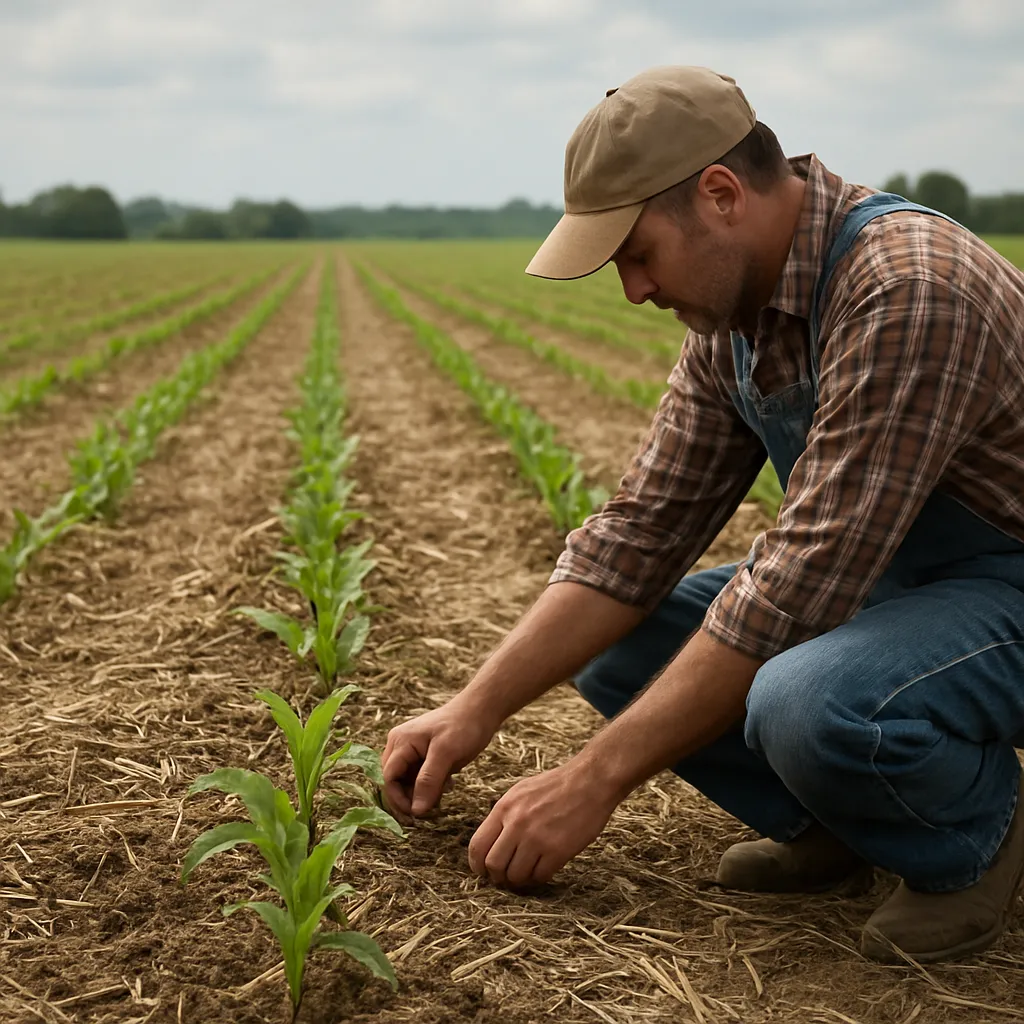
Embracing a sustainable approach to crop production often starts with reducing soil disturbance. By shifting to minimal tillage systems, farmers can conserve moisture, protect soil structure, and foster healthier ecosystems. This article explores proven strategies to grow crops effectively while minimizing mechanical interference with the soil.
Understanding the Principles and Advantages
Minimal tillage revolves around the concept of preserving the soil’s natural architecture. Instead of deep plowing or intensive turning of the earth, farmers limit tillage operations to narrow seed zones. This practice offers numerous benefits:
- Erosion control: Undisturbed soil and crop residues shield the surface from wind and water damage.
- Moisture retention: Residues act like a mulch layer, reducing evaporation and keeping the soil profile more uniformly damp.
- Enhanced biodiversity: Earthworms, beneficial insects, and microbial communities thrive in stable soil conditions.
- Improved nutrient cycling: Organic matter decomposes more naturally, releasing nutrients in tune with crop demands.
- Lower fuel and labor costs: Fewer passes across the field mean efficiency gains and reduced greenhouse gas emissions.
Adopting minimal tillage requires a shift from traditional mindsets. Instead of viewing fields as items to be turned, cultivators become stewards of an intricate living system.
Preparing Your Soil and Selecting Appropriate Equipment
Successful minimal tillage begins with a thorough assessment of soil conditions and proper machinery setup. Follow these key steps:
- Soil testing: Analyze pH, organic matter, and nutrient levels to determine baseline fertility requirements.
- Residue management: If transitioning from intensive tillage, spread and level leftover crop residue to prevent clumping.
- Equipment choice: Invest in specialized planters and drills designed for minimal soil disturbance. Look for features such as:
- Coulters or opener discs to slice residue cleanly
- Double-disk openers for precise seed placement
- Depth bands and gauge wheels for uniform seeding depth
- Tire and track systems: Consider wide tires or tracks to reduce compaction when supporting heavy machinery.
Calibration of equipment is critical. Each pass must deliver seeds at the right depth, spacing, and soil-to-seed contact. Regular checks and adjustments ensure consistent emergence and vigor.
Optimizing Seedbed Conditions with Residue and Cover Crops
One of the hallmark features of minimal tillage is the retention of crop residues on the soil surface. These residues play multiple roles:
- Suppressing weed germination by blocking light.
- Protecting against temperature extremes to improve seedling survival.
- Feeding soil organisms that enhance soil structure over time.
Complement residue management with a diverse cover crop suite:
- Legumes (e.g., clover, vetch) to fix atmospheric nitrogen.
- Grasses (e.g., rye, oats) for quick biomass production and weed suppression.
- Brassicas (e.g., radish, mustard) to break up compacted zones with deep taproots.
Terminate cover crops at the optimal time—usually flowering initiation—to maximize biomass and nutrient cycling. Use a roller-crimper or a light herbicide application to flatten the mulch layer for effective planting.
Efficient Planting Techniques for Uniform Stand Establishment
Precision in seeding is essential under minimal tillage. Uneven stands lead to competition for resources and yield variability. Implement these techniques:
- Controlled Traffic Farming: Restrict machinery to permanent lanes to minimize compaction in crop zones.
- Use banded fertilization: Place nutrients close to the seed to reduce overall fertilizer rates and improve early vigor.
- Adjust seeding rates based on residue cover: Denser mulch may require slightly higher population targets to compensate for any delayed emergence.
- Monitor soil temperature: Colder soils under heavy residue might slow germination. Consider early-maturing varieties if spring warmth is limited.
Regularly scout fields during emergence to identify and correct any mechanical or environmental issues swiftly.
Managing Weeds, Pests, and Diseases in Reduced-Tillage Systems
Without intensive soil turnover, weed seeds remain near the surface, ready to germinate. An integrated approach is vital:
Weed Control Strategies
- Pre-emergent herbicides to create a chemical barrier without deep incorporation.
- Mechanical inter-row cultivation after crop emergence using shallow tools.
- Stale seedbed technique: Lightly disturb the seedbed before planting to encourage weeds, then eliminate them ahead of crop sowing.
Pest and Disease Management
- Rotate crops annually to disrupt pest cycles and reduce buildup of soil-borne diseases.
- Encourage natural predators by planting flowering margins and cover crops.
- Scout regularly for early signs of fungal or insect pressure to apply targeted treatments.
Maintaining robust crop health through balanced nutrition and proper water management reduces vulnerability to threats in minimal tillage systems.
Long-Term Soil Health and Crop Rotation Practices
Minimal tillage is most effective when combined with thoughtful crop sequencing. A diverse rotation helps maintain soil fertility and break pest cycles:
- Alternate deep-rooted crops (e.g., sunflowers, alfalfa) with shallow-rooted grains to explore different soil layers.
- Include legumes every two to three years to boost nitrogen availability naturally.
- Integrate forage or cover crops during fallow periods to protect soil and add organic matter.
Over time, continuous minimal tillage leads to improved soil aggregation, higher water infiltration rates, and a more resilient farming system capable of sustaining yields with reduced inputs.