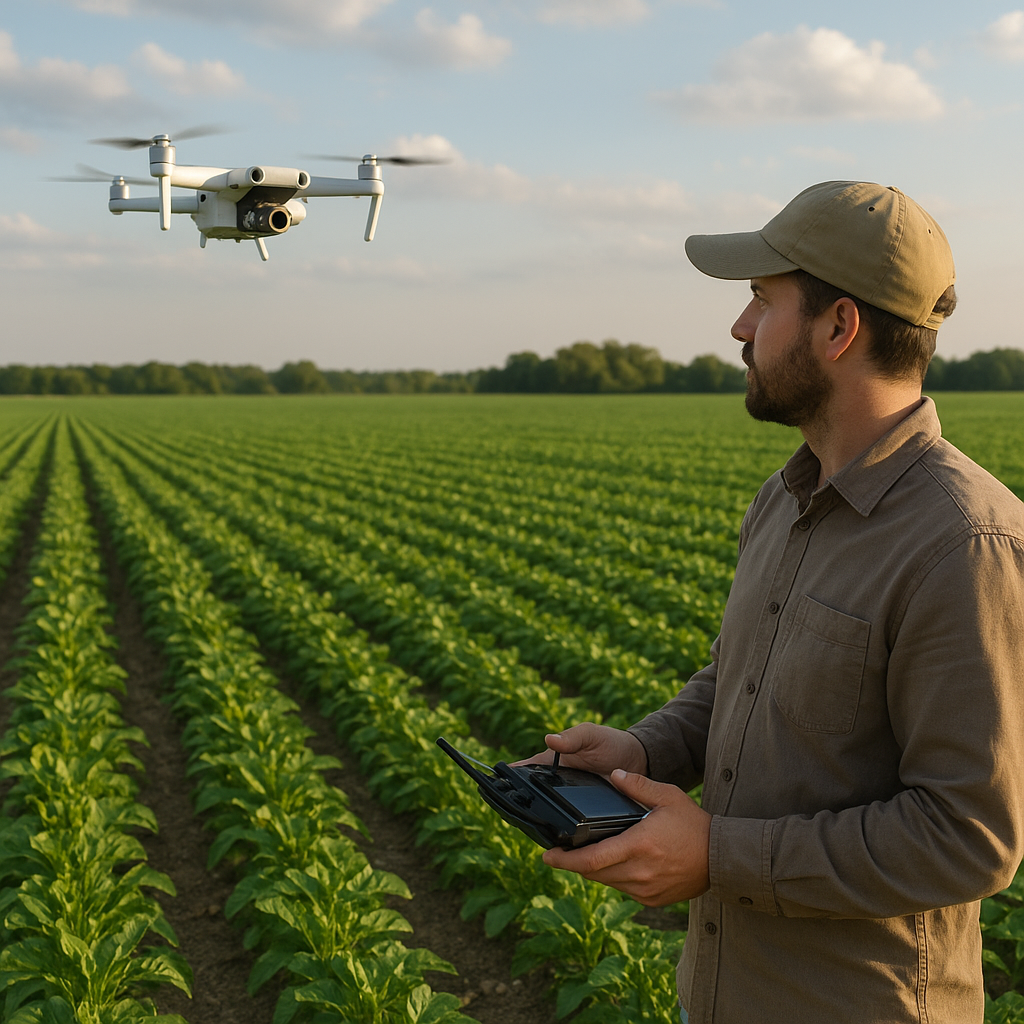
Drones have rapidly transformed the landscape of modern agriculture, offering farmers unprecedented access to aerial insights and operational control. By integrating unmanned aerial vehicles into everyday farm activities, growers can enhance efficiency, optimize resource use, and improve crop health monitoring. This article explores practical tips for leveraging drones in farming, from selecting the right equipment to implementing best practices and staying compliant with regulations.
Advanced Crop Monitoring with Aerial Imaging
High-resolution aerial imagery allows farmers to detect issues before they become widespread. Drones equipped with multispectral and thermal sensors gather data on plant health, soil moisture, and pest infestations. Through regular flights, growers can map fields and produce detailed reports, enabling precision agriculture techniques.
Multispectral Mapping and NDVI Analysis
- Use multispectral cameras to capture near-infrared, red-edge, and visible bands.
- Generate NDVI (Normalized Difference Vegetation Index) maps to highlight stress zones.
- Monitor vegetation vigor over time to correlate weather events and treatment effects.
By analyzing NDVI imagery, farmers identify underperforming zones and implement targeted interventions, reducing fertilizer waste and improving overall yields.
Selecting the Right Camera and Platform
- Fixed-wing drones excel at covering vast areas quickly, while multirotors offer real-time hover and pinpoint imaging.
- Match payload capacity with the weight of advanced sensors and cameras.
- Consider flight time—longer autonomy minimizes battery swaps and maximizes coverage.
Mapping efficiency depends on the synergy between hardware and software, ensuring accurate georeferenced data that feeds into farm management systems.
Enhancing Field Management and Resource Allocation
Data-driven insights from drone surveys drive smarter decisions in irrigation, fertilization, and pesticide application. Farmers can implement variable-rate strategies that deliver inputs exactly where needed, promoting sustainability and cutting operational costs.
Variable Rate Application (VRA)
- Convert NDVI maps into prescription files compatible with automatic spreaders and sprayers.
- Apply water, nutrients, or crop protection agents based on crop vigor and growth stages.
- Reduce over-application in healthy zones and bolster support in stressed areas.
Such targeted approaches not only conserve resources but also minimize environmental impact, making drone-enabled VRA a cost-effective solution for modern growers.
Soil and Moisture Profiling
- Attach thermal or moisture sensors to detect dry spots and drainage issues.
- Generate detailed moisture distribution maps to optimize irrigation scheduling.
- Combine drone data with ground-based probes for enhanced accuracy.
By pinpointing drainage inefficiencies and runoff zones, farmers improve water management, boosting crop resilience and automation of irrigation systems.
Operational Best Practices and Regulatory Considerations
Reliable performance hinges on diligent planning, regular maintenance, and compliance with evolving drone regulations. Adhering to best practices ensures safe operations and sustained data quality.
Flight Planning and Battery Management
- Use mission-planning software to define waypoints, altitude, and speed.
- Plan flights during optimal weather windows—low wind, good visibility, stable temperatures.
- Cycle and calibrate batteries to maintain peak performance and longevity.
Proper pre-flight checks and post-flight inspections reduce the risk of midair failures and guarantee consistent data collection for data-driven decisions.
Compliance with Local Regulations
- Register drones with aviation authorities and obtain necessary certifications.
- Respect restricted zones, altitude limits, and privacy laws.
- Maintain flight logs and operational manuals to demonstrate compliance.
Understanding airspace rules and maintaining drone integration protocols fosters good relationships with regulators and neighboring communities, safeguarding your farm’s operations.
Future Trends in Drone-Powered Agriculture
The convergence of drones with artificial intelligence, robotics, and IoT platforms is reshaping farm management. Emerging solutions offer autonomous scouting, advanced analytics, and seamless hardware integration.
Integration with AI and Machine Learning
- Automate image classification to detect diseases, nutrient deficiencies, and pest outbreaks.
- Train algorithms on historical farm data for predictive modeling and yield forecasting.
- Deploy edge computing on drones to process images in flight and reduce data transfer.
AI-driven analyses accelerate decision-making, enabling farmers to address field issues in near-real time and maximize produce quality.
Swarm Technology and Autonomous Missions
- Coordinate multiple drones for simultaneous scouting and treatments.
- Implement return-to-home and safety protocols in case of connectivity loss.
- Scale operations on large farms without proportionally increasing labor.
Swarm deployments promise higher throughput and redundancy, lowering per-acre operational costs and amplifying farm-wide affordability.
Building a Sustainable Drone Ecosystem on the Farm
To sustain long-term benefits, integrate drones into a holistic farm management framework. Combine aerial insights with ground sensors, weather stations, and field trials to develop a robust data repository.
Training and Knowledge Sharing
- Invest in operator training to master flight controls and data interpretation.
- Join agricultural UAV networks to exchange strategies and case studies.
- Conduct pilot programs on smaller plots before scaling across the entire farm.
Empowered with hands-on experience and community insights, farm teams can fully leverage drone capabilities, driving continuous improvement and technological adoption.
Evaluating Return on Investment (ROI)
- Track input savings, yield improvements, and time reductions attributable to drone operations.
- Compare manual scouting and treatment costs versus drone-based workflows.
- Assess equipment lifespan, maintenance expenses, and software subscription fees.
Regular ROI assessments help in justifying further investments, ensuring that drone integration remains financially sustainable and aligned with long-term farm objectives.